With the creek crossing and access road more or less sorted, it was time to address the build site. This isn’t the place where we may or may not ultimately build a house (now that we’ve built a different house in Kingston, those plans are far in the future). This is a levelled area upslope to site water tanks, parking, and a garage, although initially we’d be happy to have a flat spot just to park the cars and to put up a tent.
I couldn’t spare the time to rent the excavator again and do it myself, so I contracted a local to do the rough work.
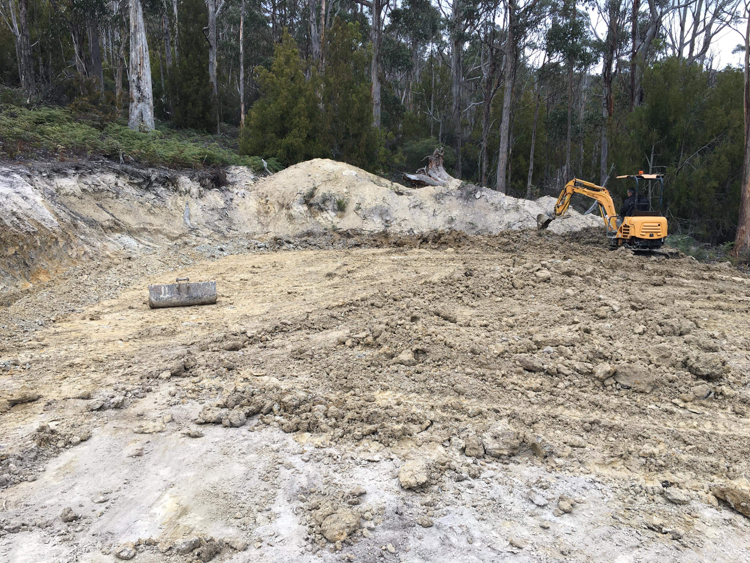
The geological survey had noted the reactive nature of the clay soil, so I left it alone for a few seasons, to see how stable the revealed slopes were, and how much erosion that I needed to worry about.
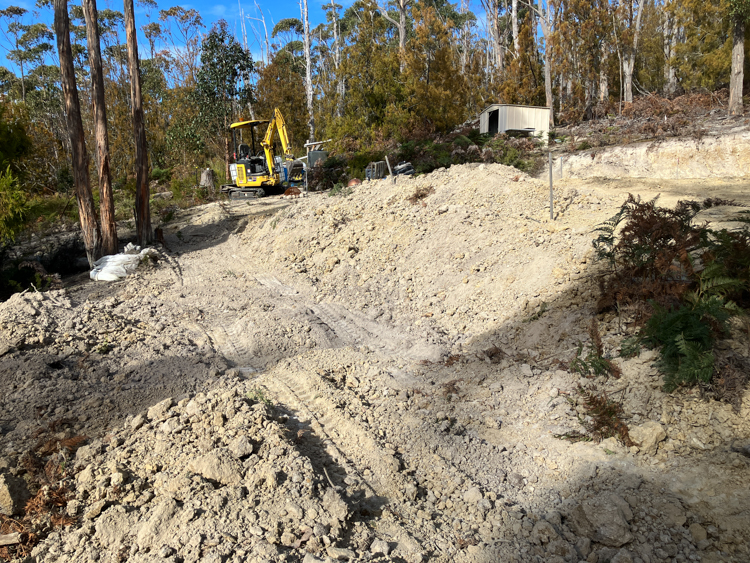
I also put up some coir netting on part of the uphill slope, as an experiment, to see if anything would grow on the clay and stabilise it. The next two pictures were taken 16 months apart.
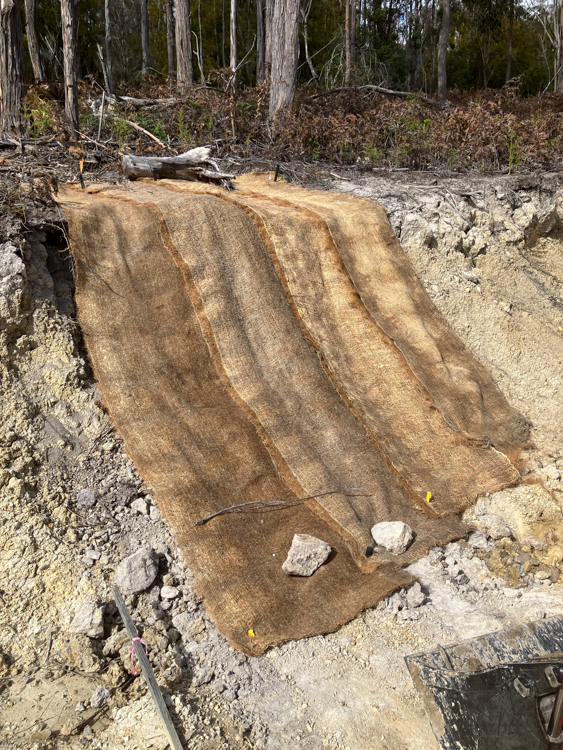
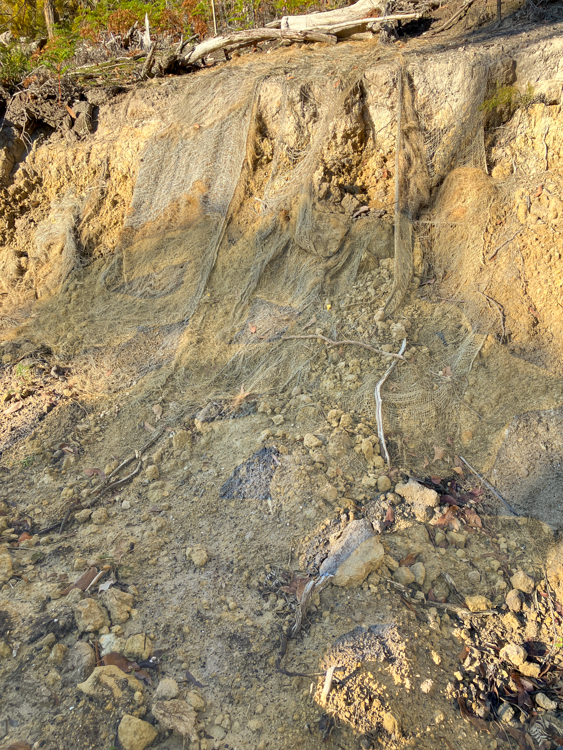
The coir wasn’t able to stop the slow creep of the excavated top slope, and clearly nothing wanted to grow there. I’d asked at the local plant nursery and they’d shaken their heads, nothing grows in reactive clay.
Still, the flattened area was reasonably stable, with a little creep and slump at the bottom margin as it tried to crawl down the hill. I spent a day with a rental excavator, tidying it up and trying to figure out what to do next.
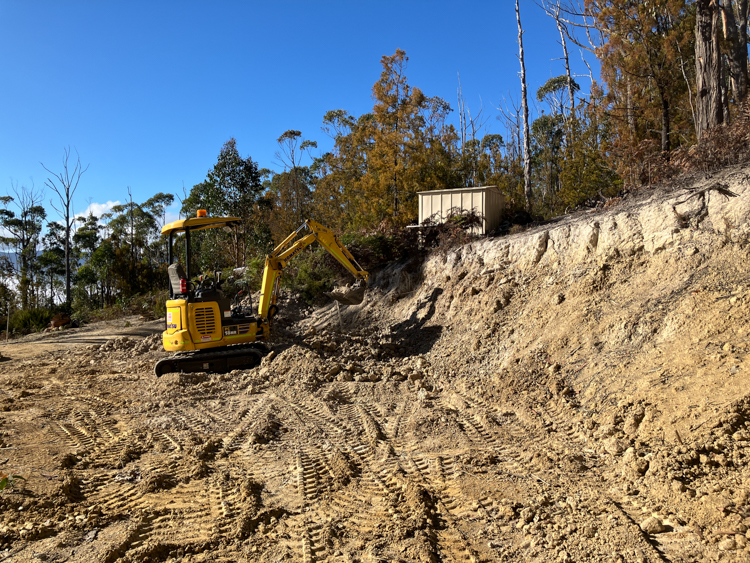
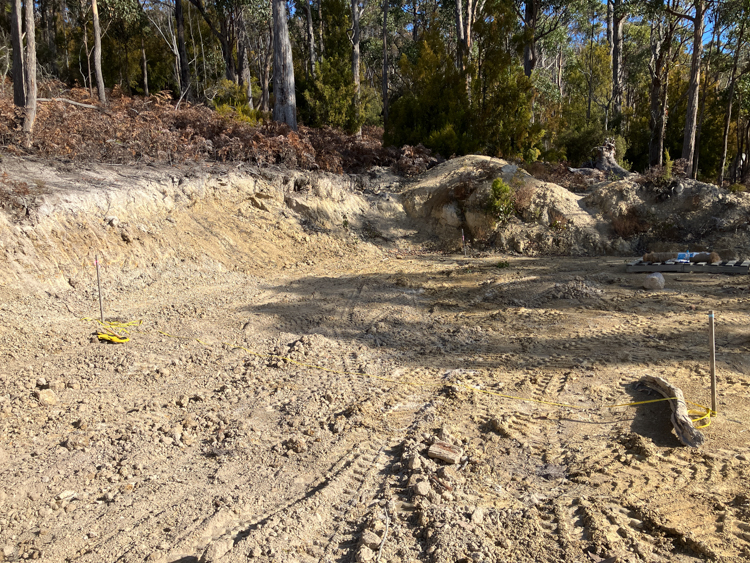
We put up the tent, lit a fire, and the aurora kicked off.
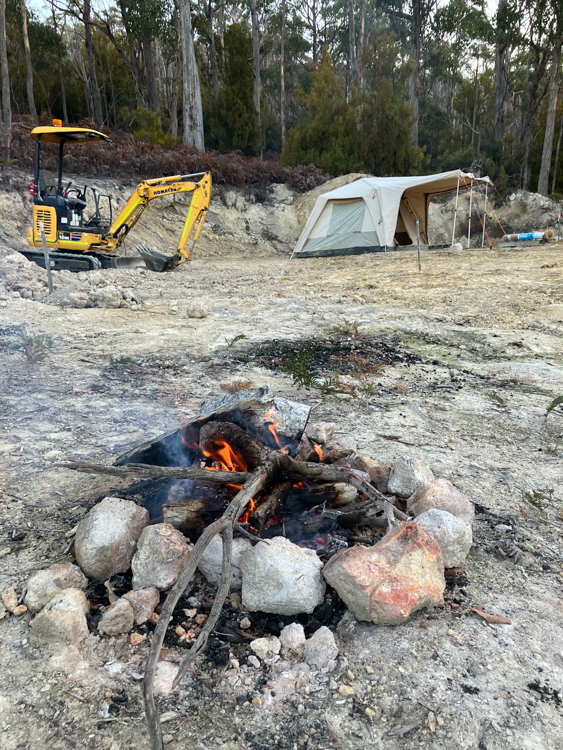


The next day, I dug out the foundation of a potential retaining wall at the lower end of the levelled section, and began investigating solutions.
One possibility for stabilising the slope was to use interlocking cement blocks. These are inexpensive, simple to erect, and commonly seen on roadside embankments.
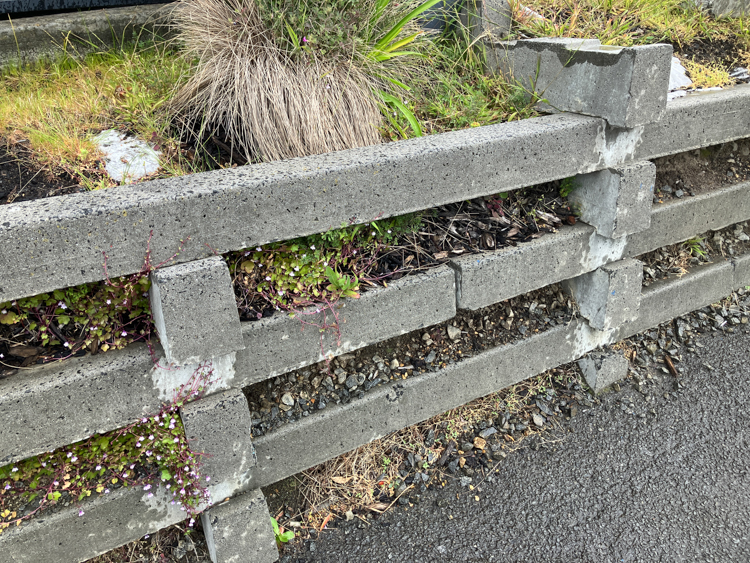
However, when I enquired, none of the local fabricators would make them. There had been a recent case in Launceston where a wall had failed catastrophically, and nobody wanted the responsibility of supplying either the blocks or the moulds to make them, not even for a small project like mine.
Another local commodity is the sandstone block, or ‘convict block’. These are reasonably inexpensive per unit, and easy to site if you have heavy machinery. I visited a local specialist at a live project, which you can see in the photo below.
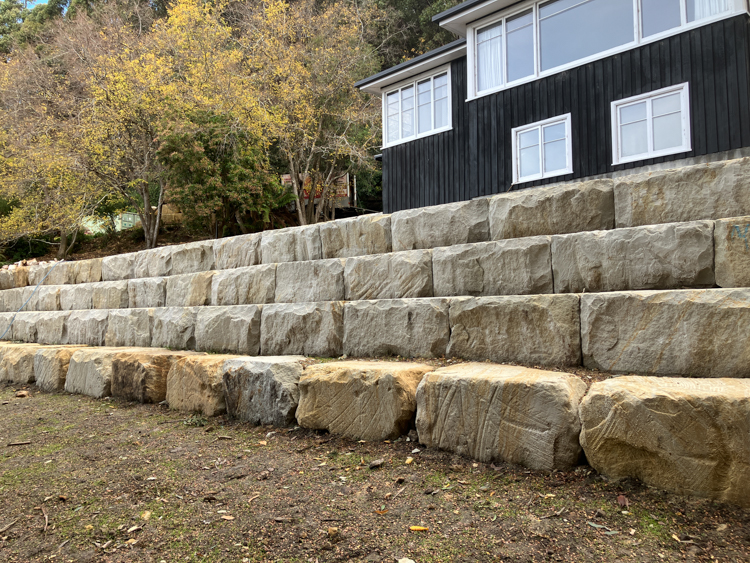
I made a rough plan, and invited him over to quote.
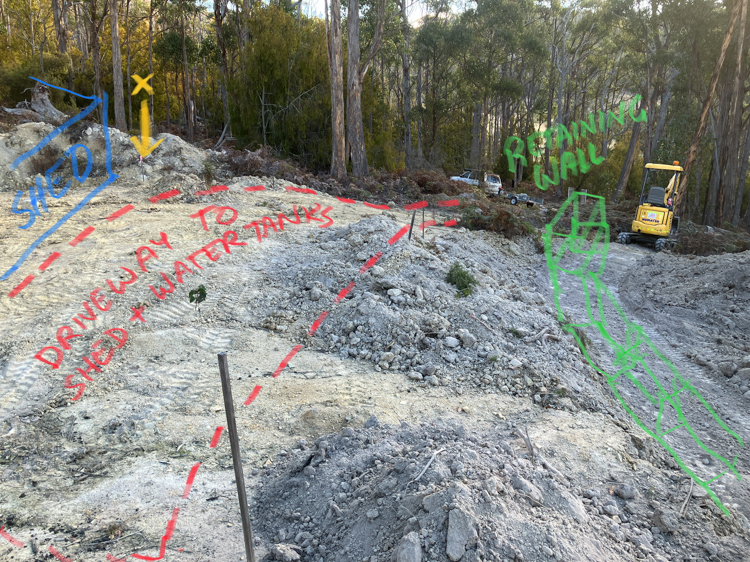
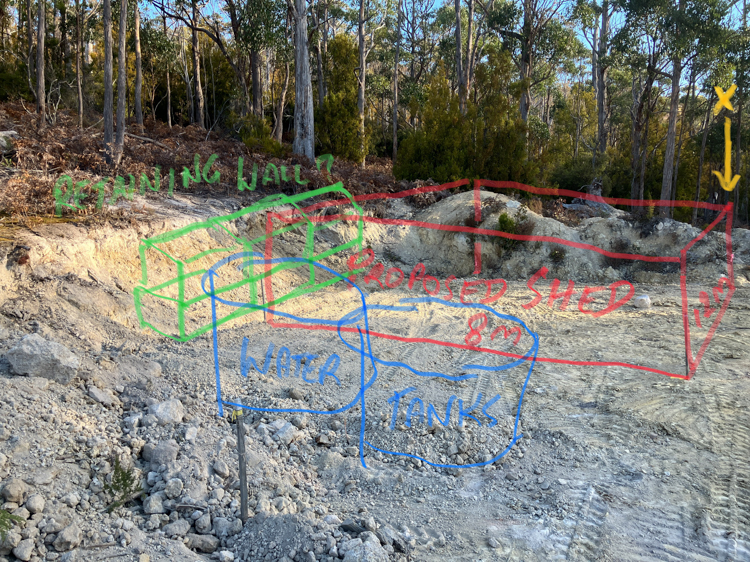
The blocks would certainly look amazing. The quote came to around $30,000 all up. Reasonable in the context of a house build, but for a shed and car park… perhaps not.
So whither next for my shed project? I still needed to stabilise that levelled area.
For some time now, I have been thinking about improving the forest’s ecosystem by digging small swales across the woodland, and filling them with fallen timber and brash to collect leaves and detritus. The aim would be to prevent all the soil from being swept off down the hill whenever it rains, and to retain organic matter in place to replenish it.
It occurred to me that, instead of building retaining walls above and below my levelled area, I could dig something like swales instead, sloping terraces that run from side to side, edged with fallen tree trunks. Water would be guided sideways across the terraces, and the tree trunks would prevent soil and other debris from moving vertically down the face.
The wet season was about to start, so I set up a test site, to see if a platform lined with trunks would slow or even prevent erosion.
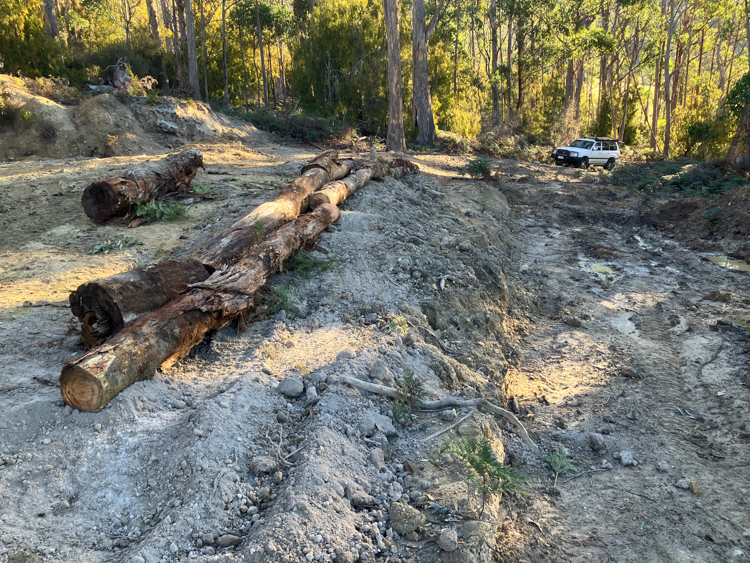
Hopefully it works better than the coir matting! Time will tell…