Once, on a plane crossing the Atlantic, I noticed the cone of a volcano projecting impressively up through the cloud layer beneath us, and ever since then, I have wanted to go to the Azores. I have always been fascinated by the geologically active Mid-Atlantic Ridge (A few years previously, we scuba-dived along part of the Ridge in Iceland), and I was keen to see another manifestation of it.
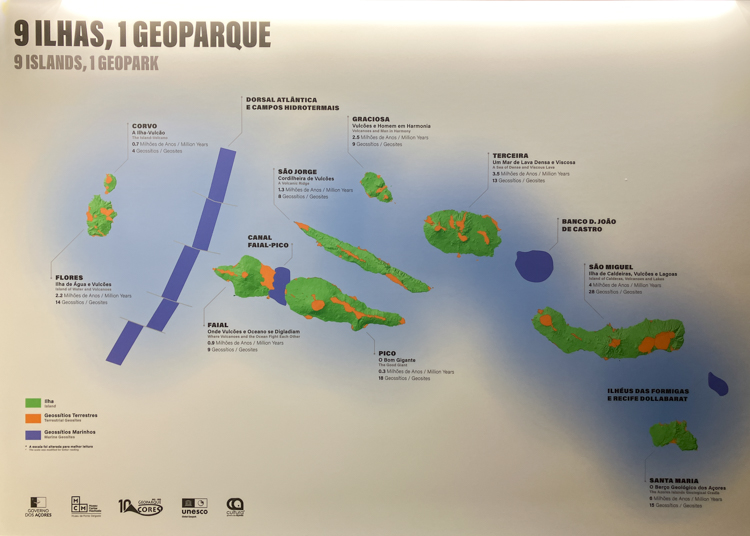
We had planned to drop anchor in the Azores island chain on our yacht Elizabeth on our way to Australia, but that trip never eventuated. Fast forward again, and we found ourselves in Europe and wondering where to celebrate New Year’s Eve. Killing two birds with one stone, we decided to celebrate in the Azores.
The islands are Portuguese, so we flew down to Lisbon and hopped across to the island of Sao Miguel, where – it was rumoured – they have an excellent New Years fireworks display in the capital, Ponta Delgada.
Arrival in Ponta Delgada
The TAP flight was efficient and we picked up our rental car without difficulty. We hadn’t been sure about getting an internet connection on our Australian phones, so we’d printed out some screen-shots of Google Maps to take us to our apartment, which went well until we dived into the skinny streets of the Old Quarter.
Our print-out had no street names, and we couldn’t figure out how to match the apartment’s address to either the map or to the one-way streets around us. First-world problems, really, but while we repeatedly passed the same buildings, I managed to pick up a wifi signal and found that we had been circling the apartment the whole time.
There was nowhere to put the car on the street, but we eventually located a car park which had some spaces. Unfortunately, the meters only accepted Portuguese coins and – fresh off the plane – we didn’t have any. The meter also accepted a local phone app, which I downloaded, but found that it only worked if you had a Portuguese bank account. In the end, I found some scuttlebutt on the internet that said that the fine for not having a ticket was exactly the same price as a day’s parking, so we just left the car there and walked to the apartment.
For the whole of our stay, we never managed to pre-purchase a parking ticket, but it all worked out on average. Some days we didn’t get a fine, and some days we got two. In contrast with using the meter, fines can be paid on the internet using international cards, so all in all it was much more convenient that way.
The museums of Ponta Delgada
The was a general store a stone’s throw from the apartment, so I got up early and stocked up on eggs and meat and cheese and yoghurt and fish and coffee, and we breakfasted in style.
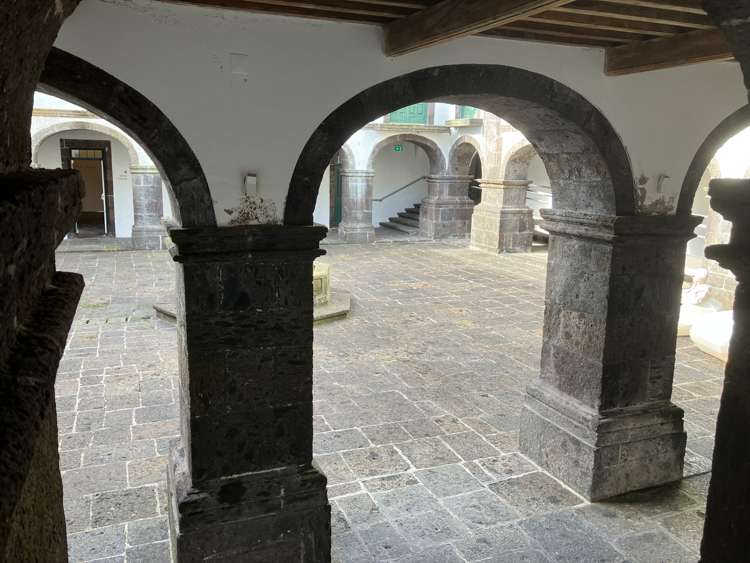
Calm and sated, we wandered up to the old Jesuit College after which our street (Rue de Collegia) was named.
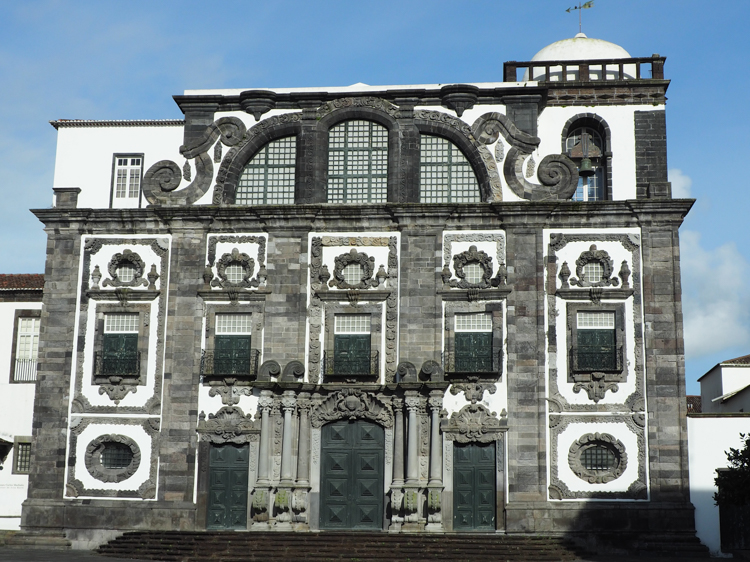
An imposing building, we entered to find that it is now a museum, but still retaining an incredible carved wooden chapel.
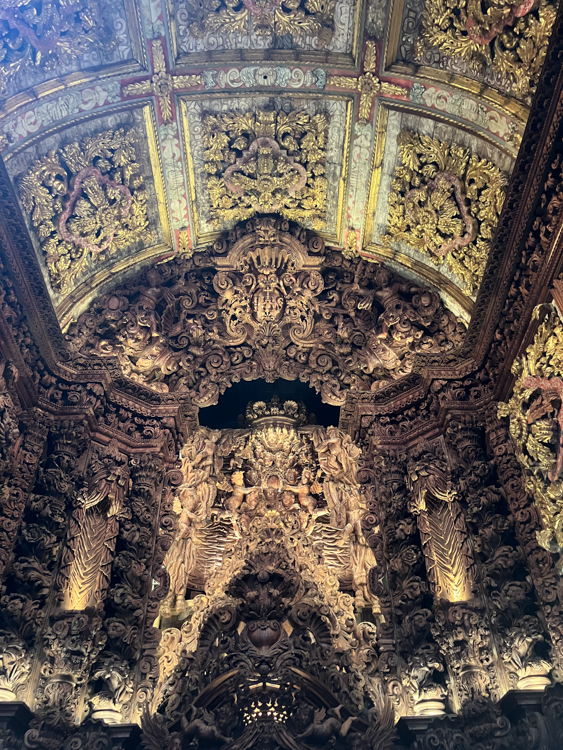
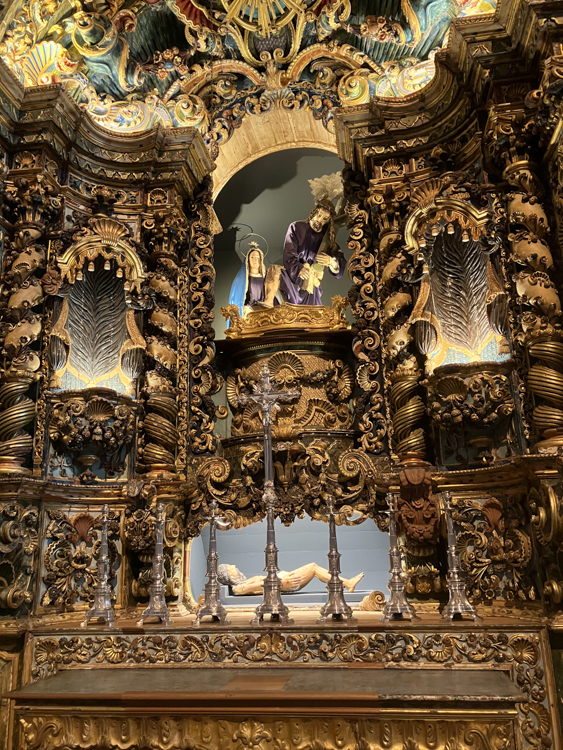
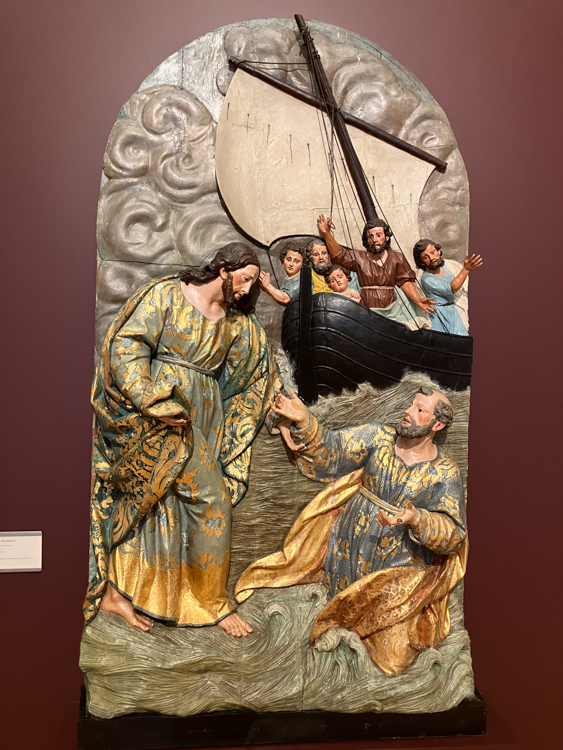
The museum itself contained a small but fascinating display of ecclesiastical objects and art.
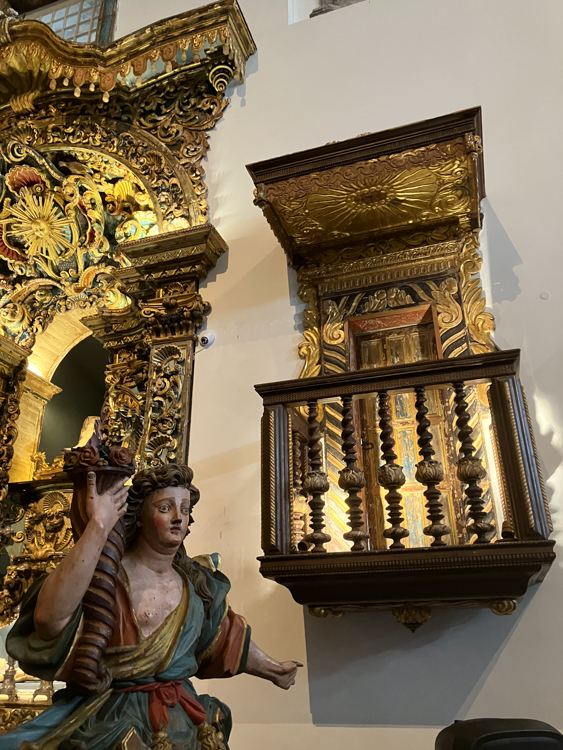
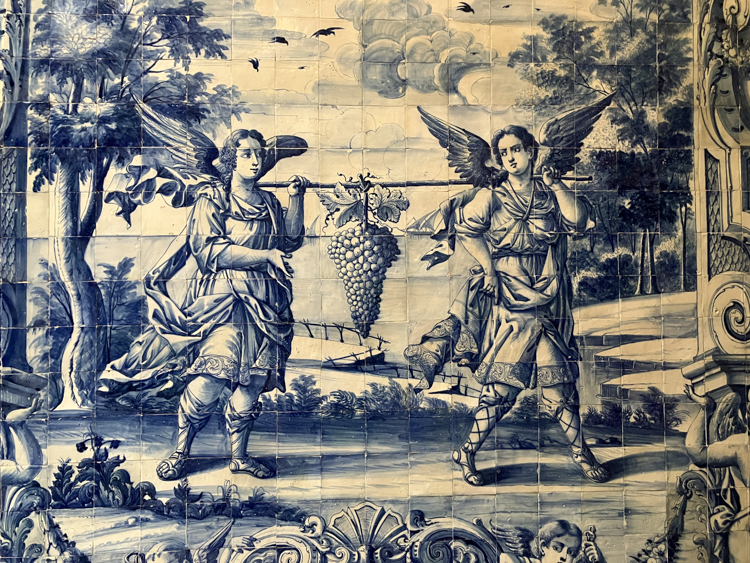
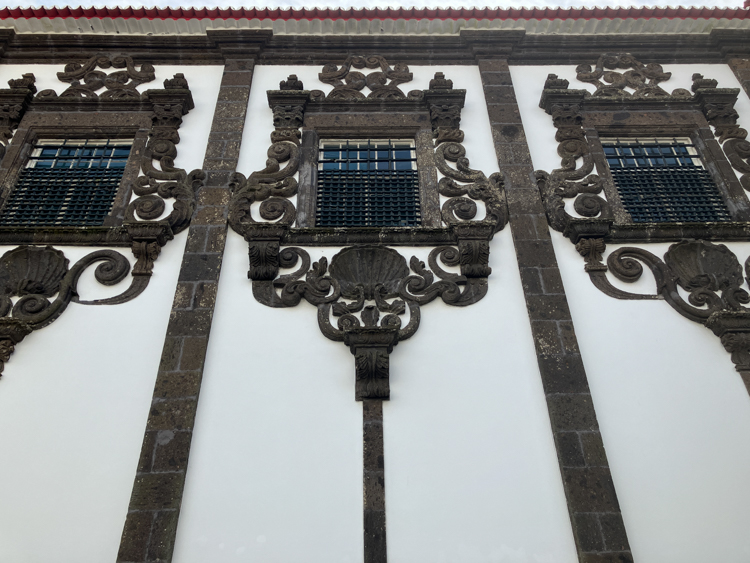
We had purchased a ticket that gave us entry to all three of the local museums, so we set off up the street to the Museum of Natural History, taking note of the architecture along the way.
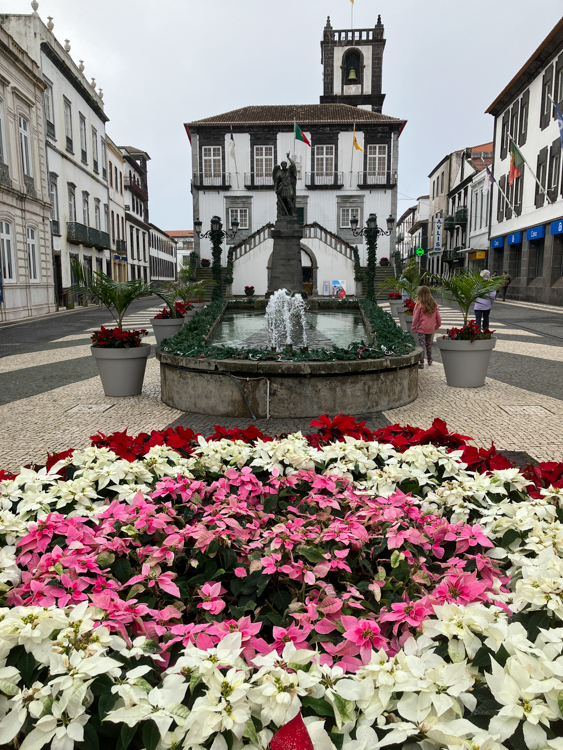
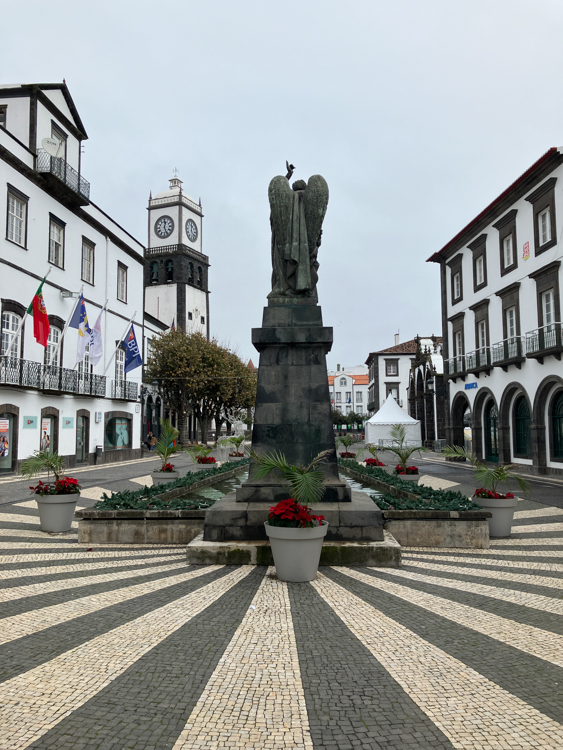
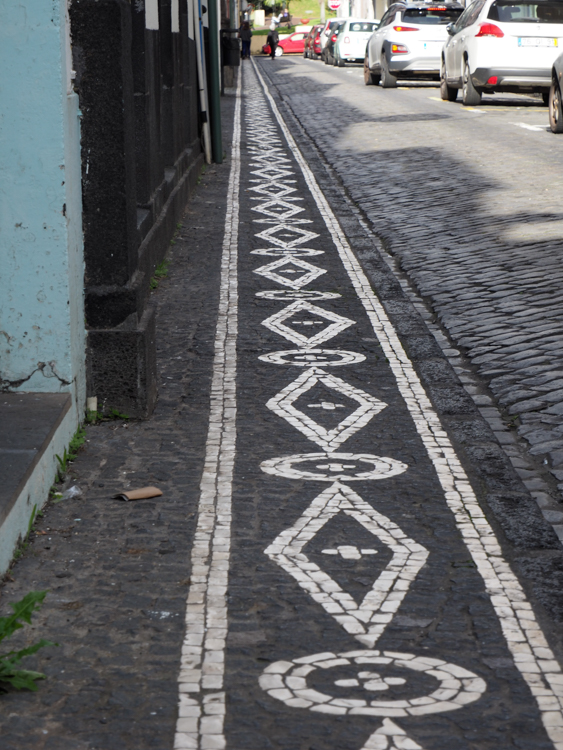

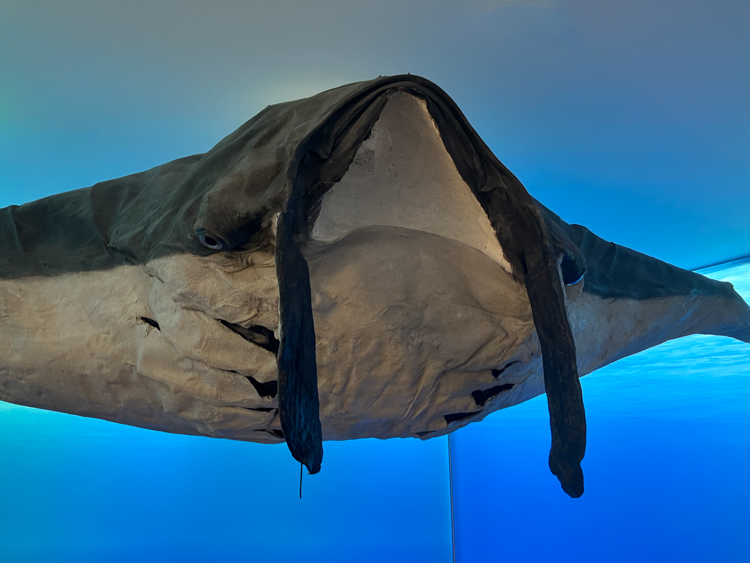
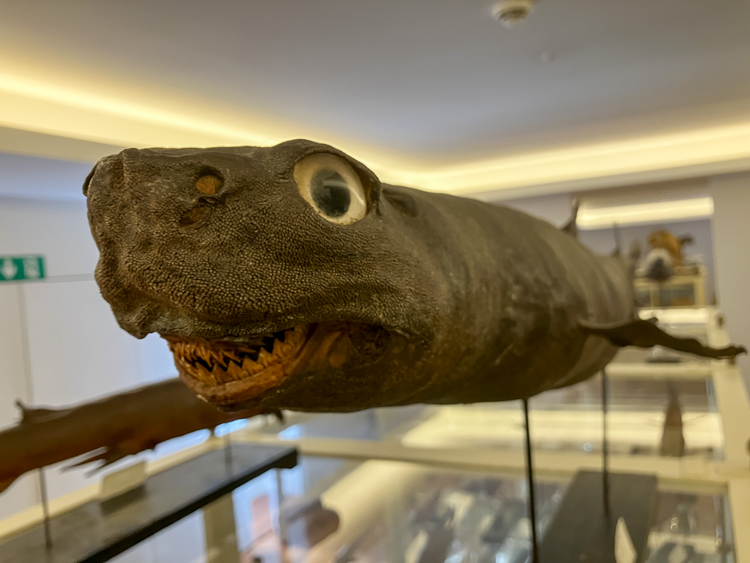
The Natural History Museum is housed in an impressive purpose-built building, and contains interesting biological and geological exhibits.
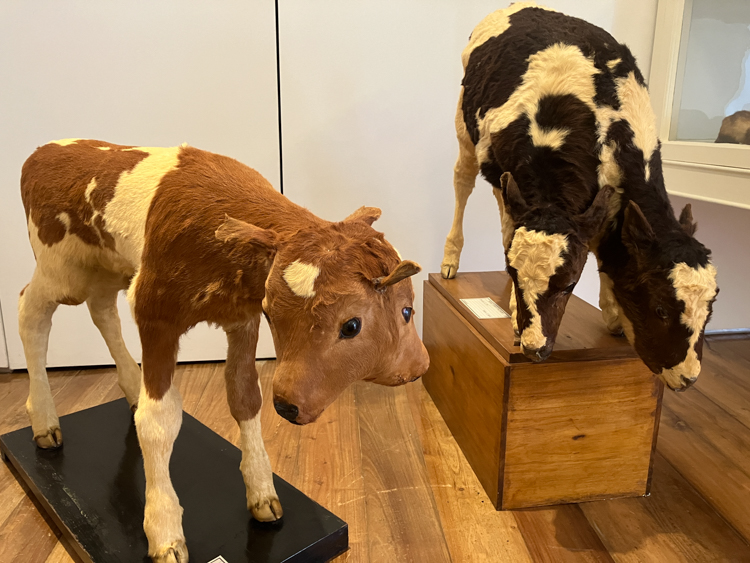
It also sports a curious array of badly stuffed animals, perhaps mounted by somebody who had never seen the animal in the wild, and including an interesting selection of two-headed livestock.
The Military Museum is housed in the fort on the sea-front, overlooking the busy port, and is well-presented and thoroughly enjoyable.
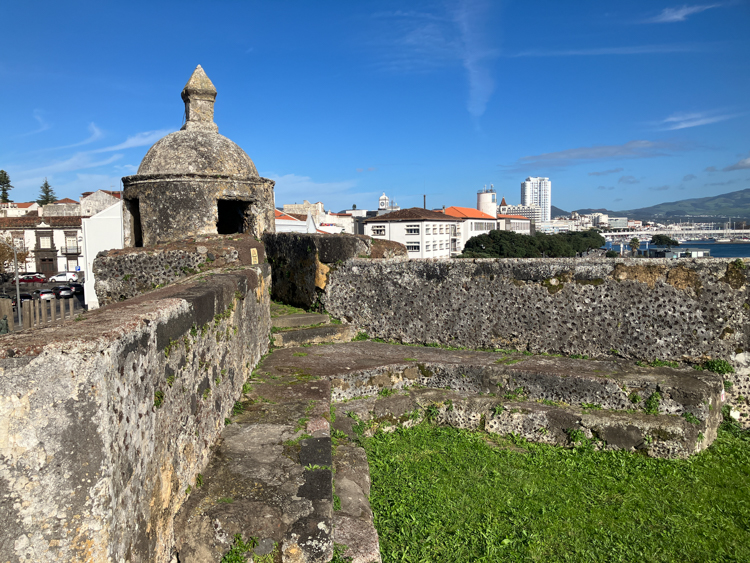
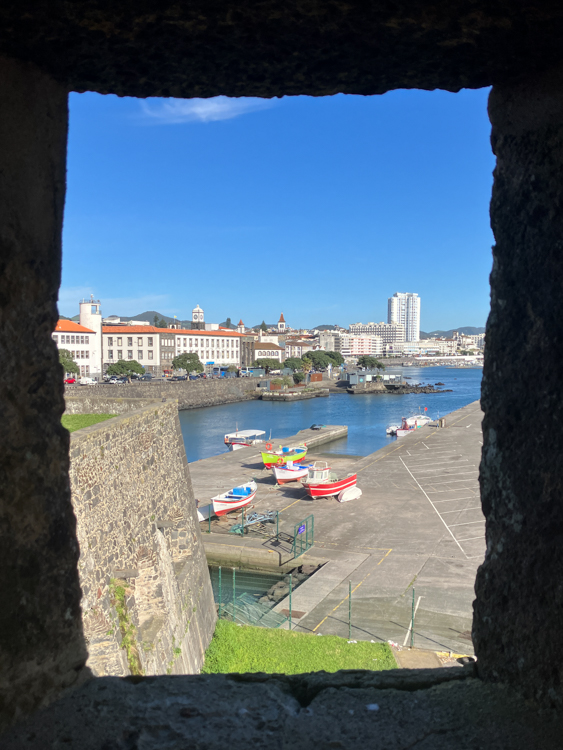
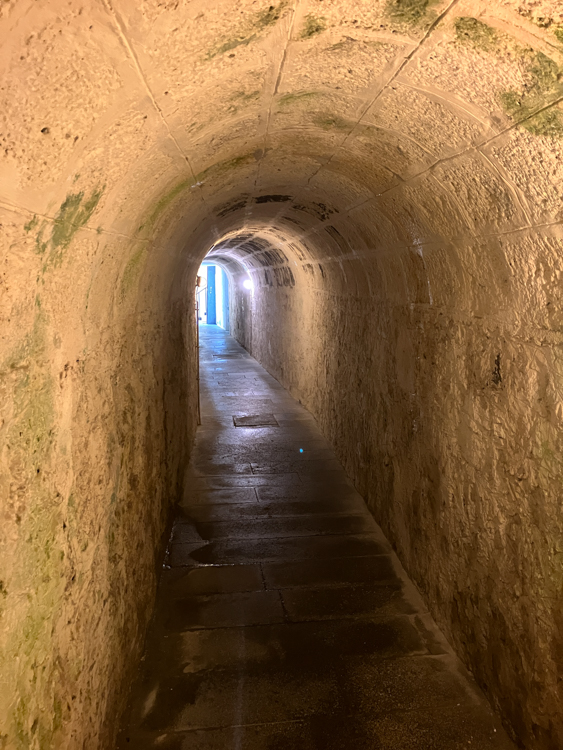
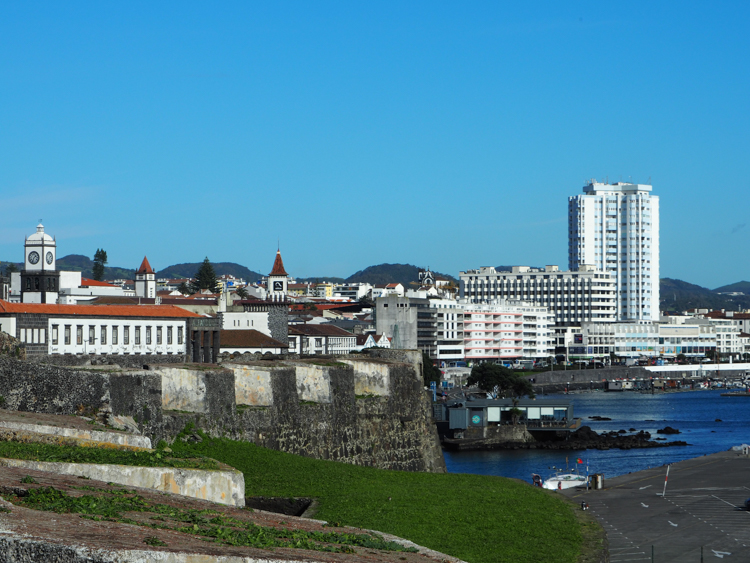
As anglophones, we knew little of Portuguese naval history, but this fort had been remodelled many times for different uses, particularly in World War II when Ponta Delgada was chosen as a potential home for the government-in-exile, should neutral mainland Portugal be overrun.
There was a whole section on the bloody Ultramarine War, where Portugal’s African colonies sought independence, and which lasted for 14 years until 1975, and which effectively ended the world’s oldest overseas empire.
Steak, fish and limpets
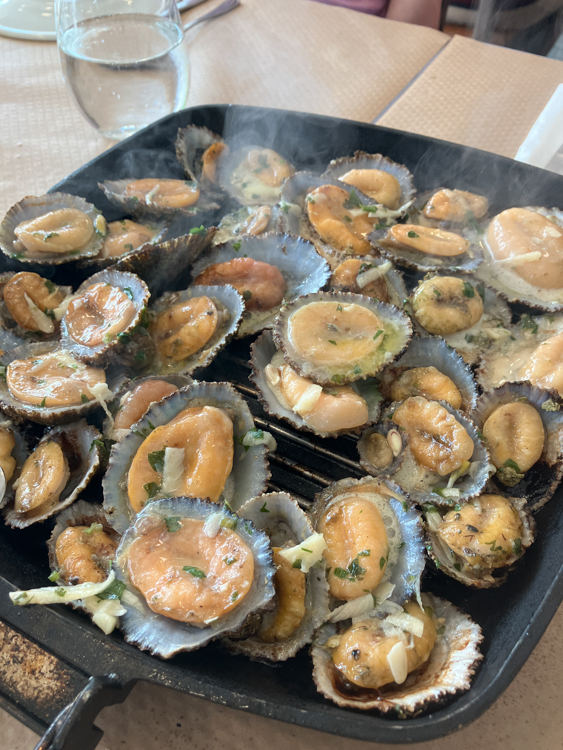
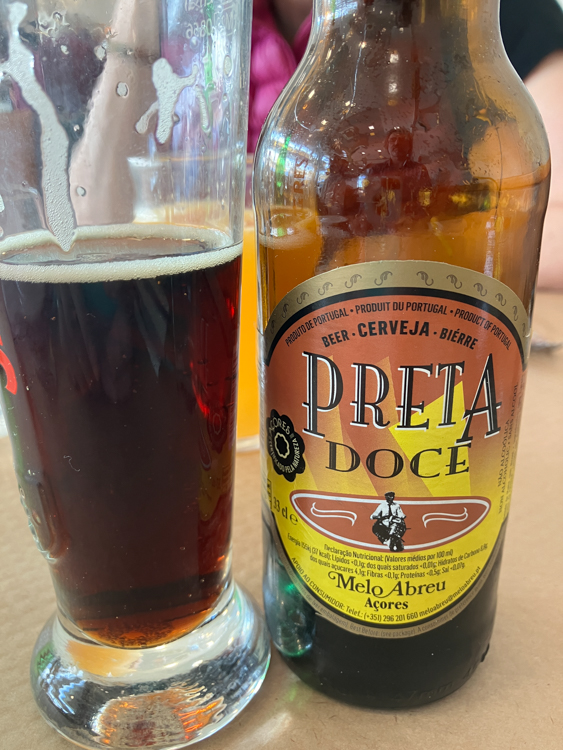
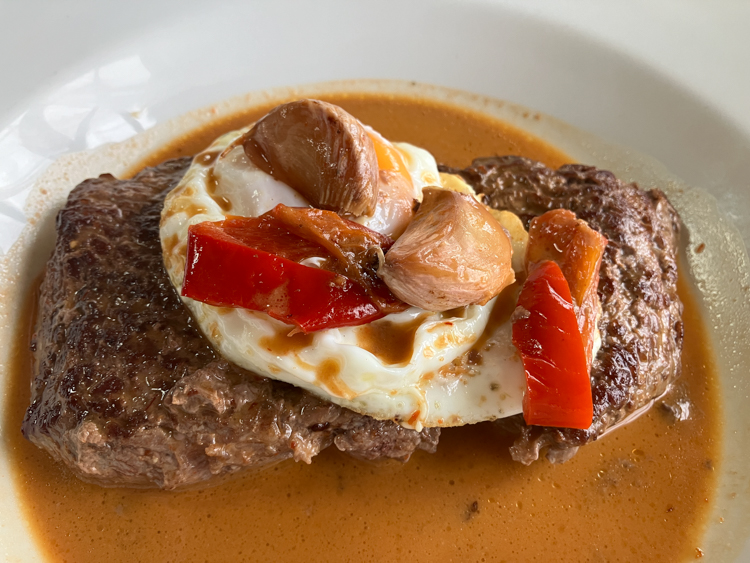
All throughout our stay on Sao Miguel, we ate like kings. Every restaurant offered swordfish and cuttlefish, and once our daughter had a steak bigger than her head. A traditional meal is limpets, grilled with herbs, butter, and garlic, and I quickly developed a taste for them. Some of the individual limpets are huge, bigger than my thumb.
New Year’s Eve
At around 11pm on New Year’s Eve, we ambled ten minutes down the road to a big sound stage, where a local band were playing to a happy crowd. There were lots of people, but it wasn’t too packed to move around.
Revellers spilled out of bars, hotels and homes; dinner jackets were not uncommon, also lots of glitter and shine for both sexes. The girls tended to tightfitting dresses or short leather skirts with chunky white heels. Everybody was having fun, and some were letting off hand-held rockets in the crowd.
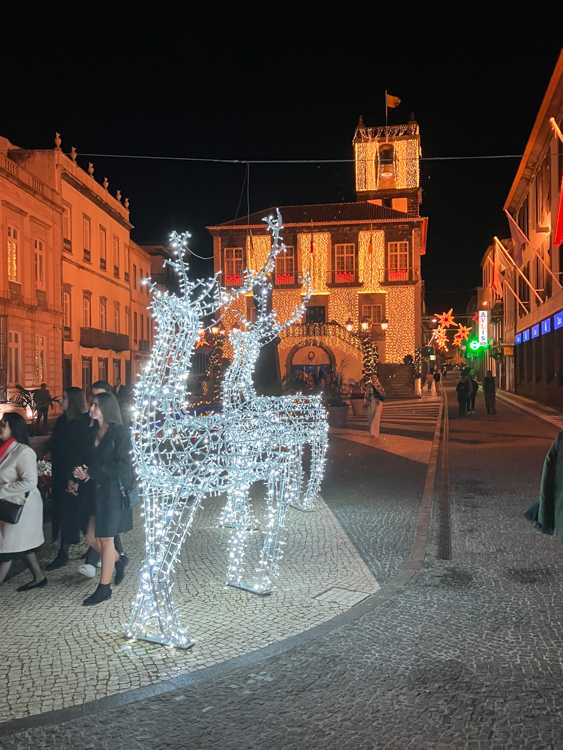
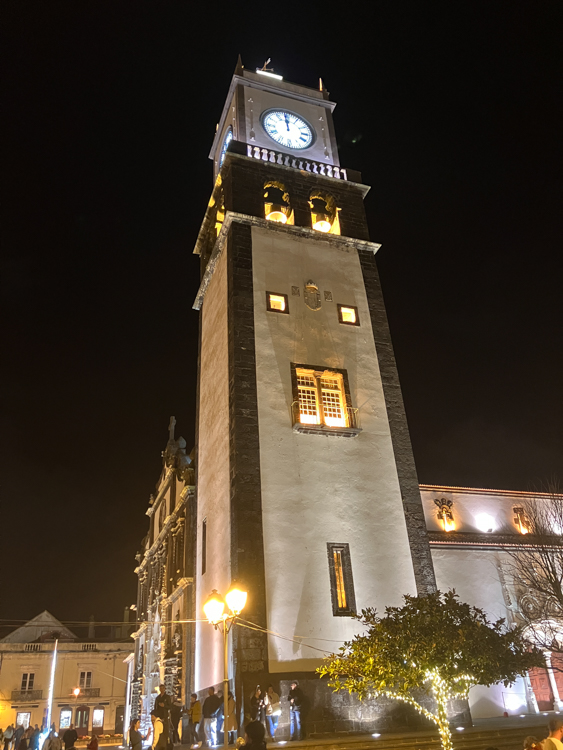
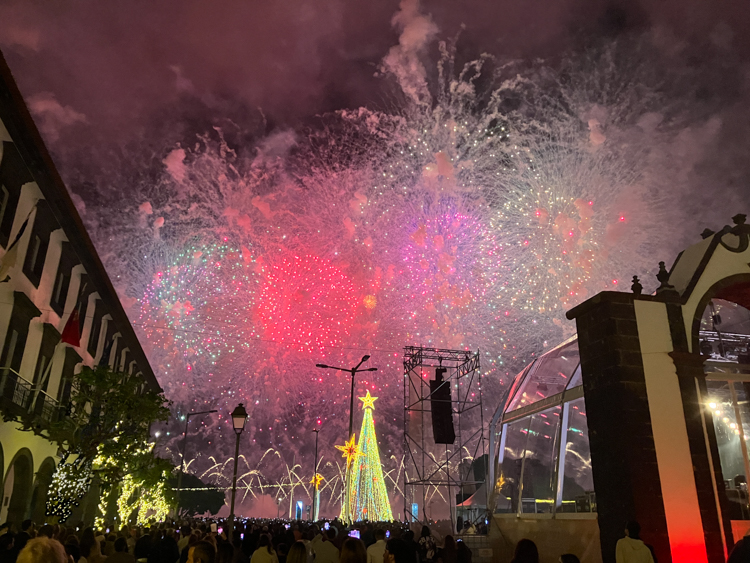
At midnight, the main fireworks began from the harbour. We’ve watched New Year’s Eve fireworks all over the world, but this one had them all beat. The night was warm, the historic setting beautiful, and people were joyful and friendly. There were no tickets, barriers, or crowd control, and there was room to move around. We’d woken our eight-year old to enjoy the show, and she was entranced.