When in Penang in Malaysia, we have always stayed on Langkawi at the wonderful Andaman, but unfortunately our favourite resort was completely destroyed by a devastating fire in 2021. Since we were passing through the region and needed somewhere to stay, we did a little research and ended up on Rebak Island, privately owned and one of the chain of islands of which Langkawi is a part.
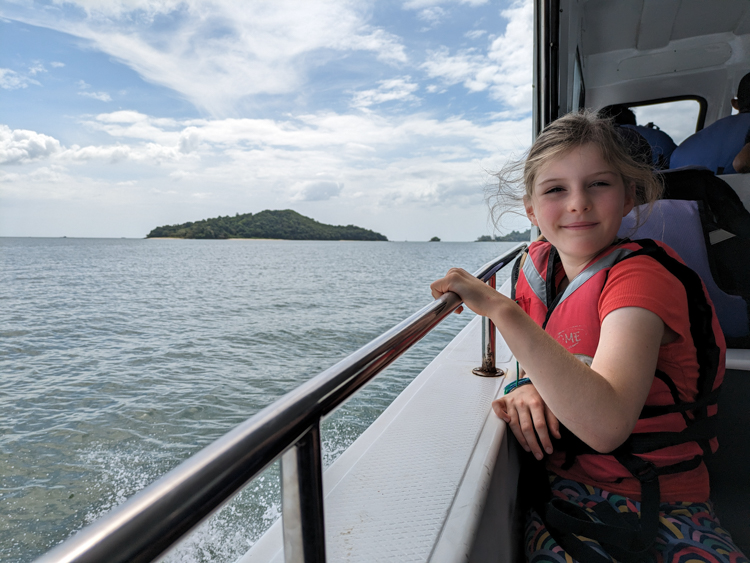
We had booked a driver to take us from Langkawi airport to the dock, where a small cabin ferry was waiting to take us across. This stretch of water is peppered with small islands, some just rocks with a few trees, and tourists flying around on boat-towed parascenders.
Red Rock Beach
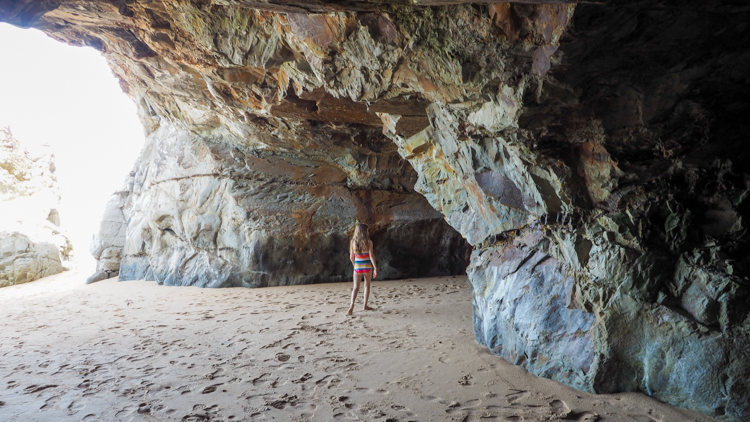
One morning, I convinced the girls that we should hike across the island to Red Rock Beach, where there is a cave accessible only at low tide. Today’s tide was scheduled a little after lunch, so we’d be walking in the hottest part of the day. They argued that this is “mad dogs and Englishmen” territory, but eventually they gave in.
The trail initially took us past the island’s marina, containing a mixture of Langkawi-based yachts with a smattering Australian and Kiwi vessels, many of which were up for sale.
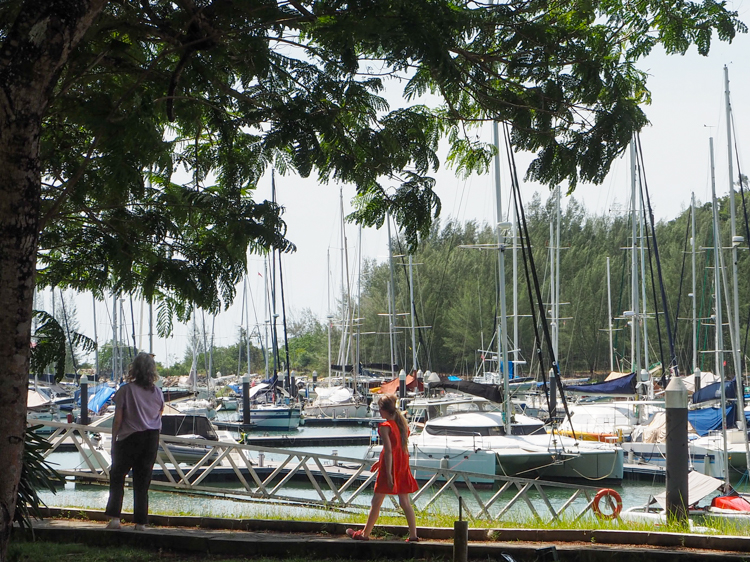
We bought some sun-tan and insect lotions at the chandlery, skirted the security block, and headed up the trail proper.
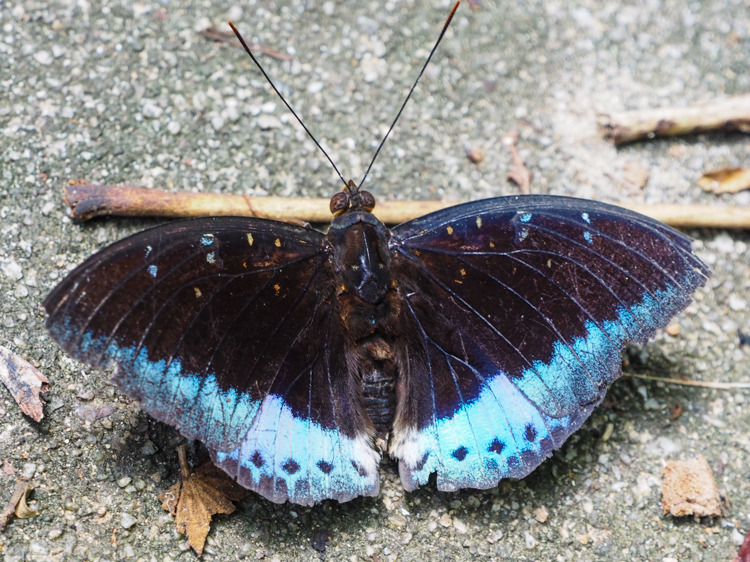
There were butterflies everywhere, huge black ones and little blue ones and tiny yellow ones, plus a prolific variety with black forewings and blue rear.
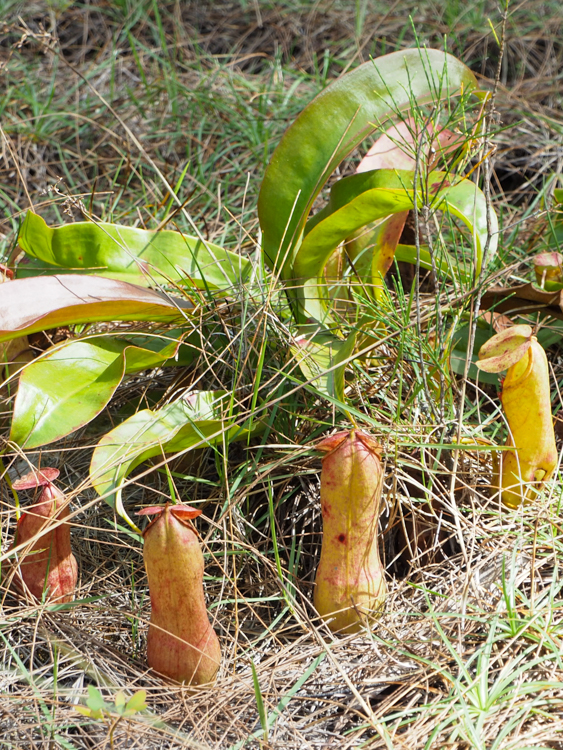
The next surprise was the large numbers of pitcher plants alongside the path, all in beautiful condition, apart from a few that had apparently been trodden on by careless passers-by.
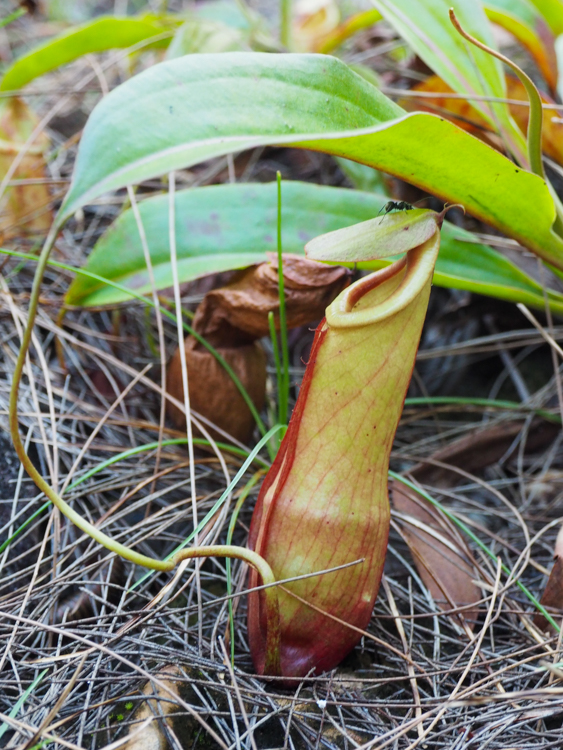
I stopped to look at them, and the girls ambled on ahead. As their chatter receded into the distance, the gentle cicada buzz swelled to a shrill whine, a continuous pure tone more electronic than insectile. A male crab-eating monkey stepped out into the path, and looked at me. I stopped, and thought myself small and inoffensive, and it got on with the business of checking the trail for edibles, before climbing a tree trunk to let me go by.
From here, the path descended steeply, flanked by a convenient rope strung between the trees.
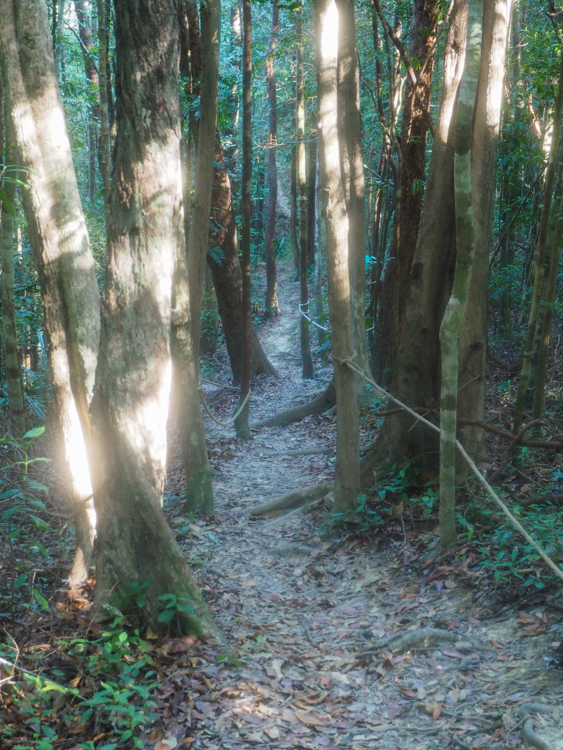
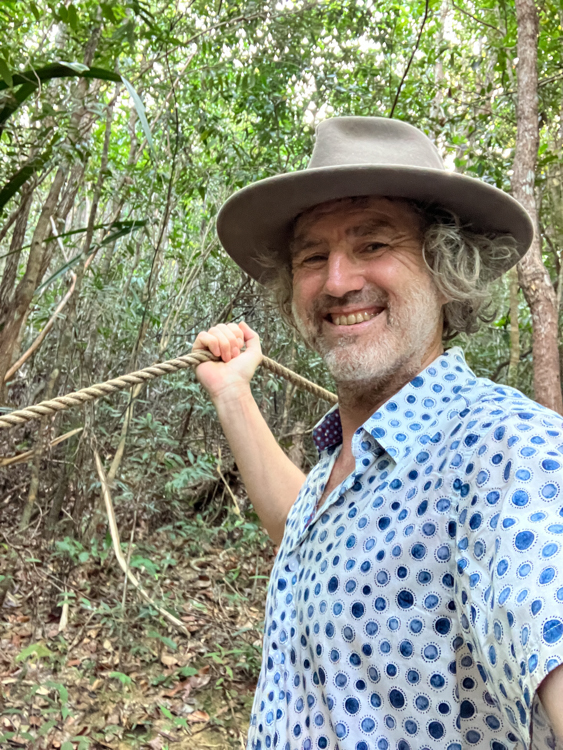
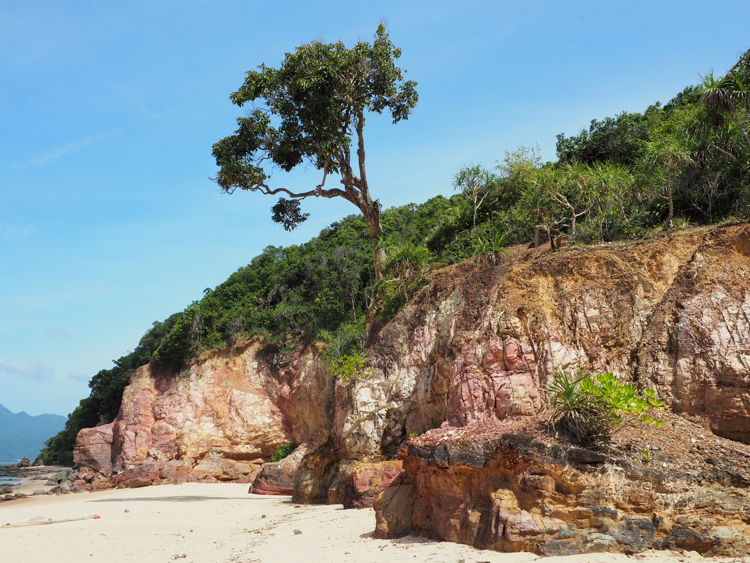
…and finally, Red Rock Beach, famous for its striking beauty.
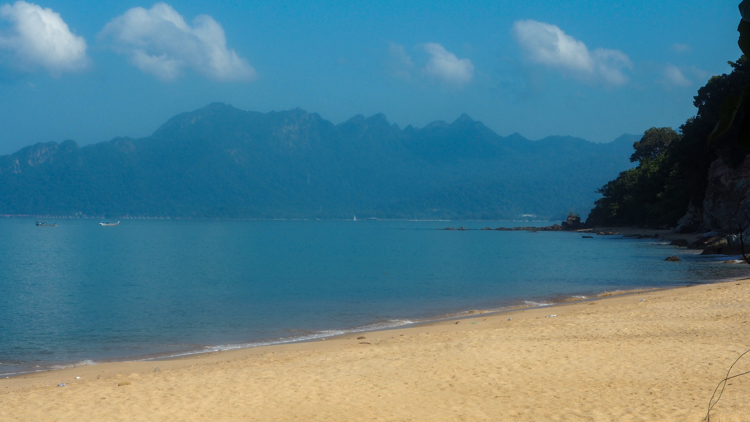
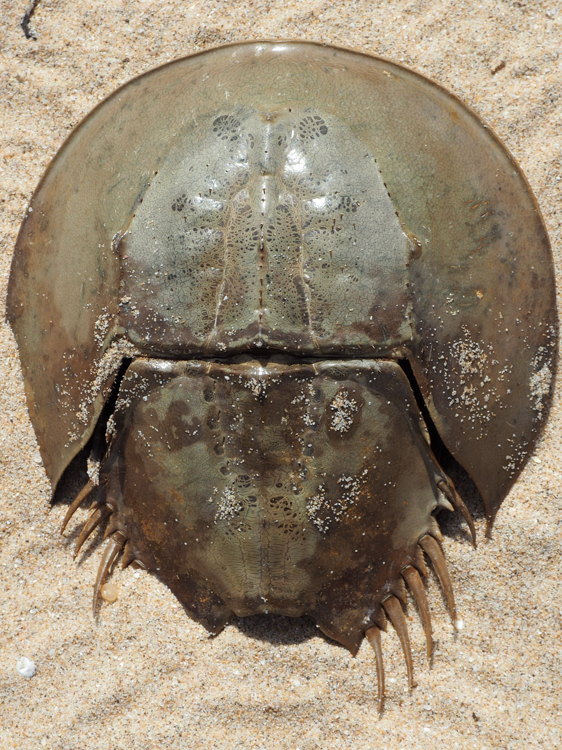
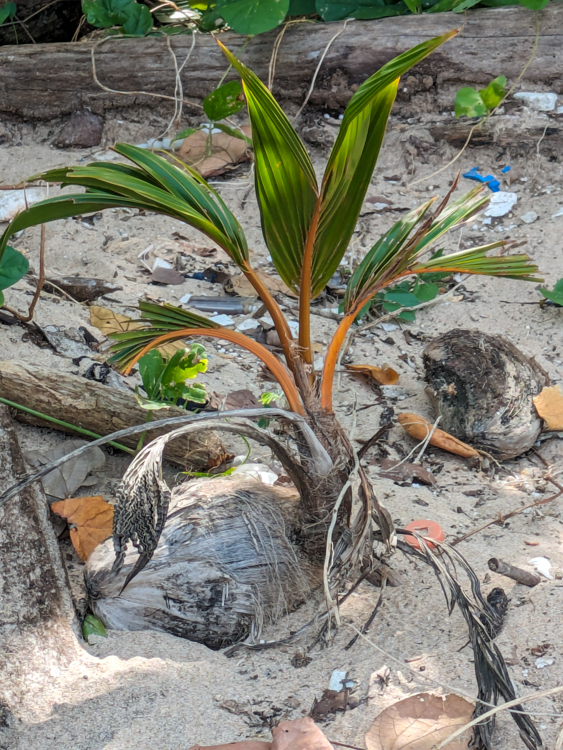
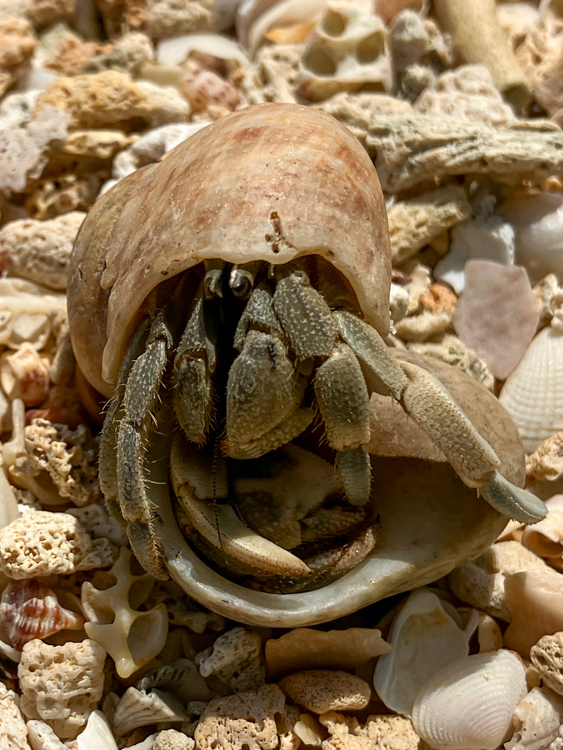
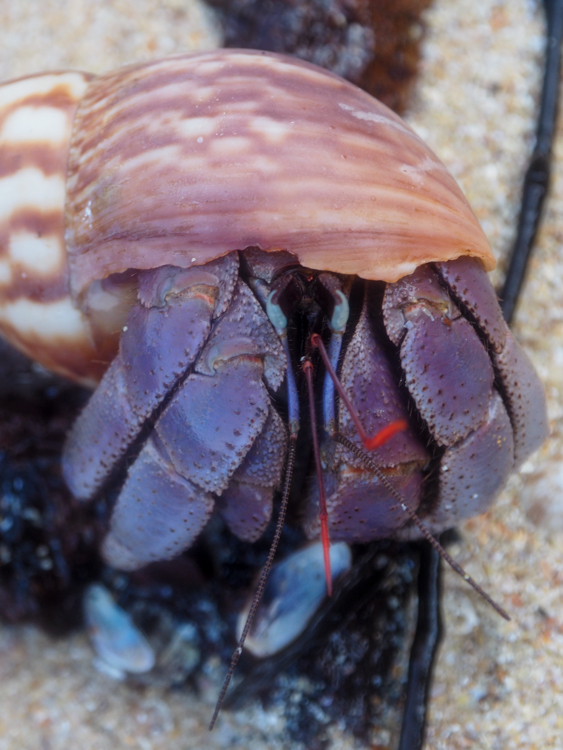
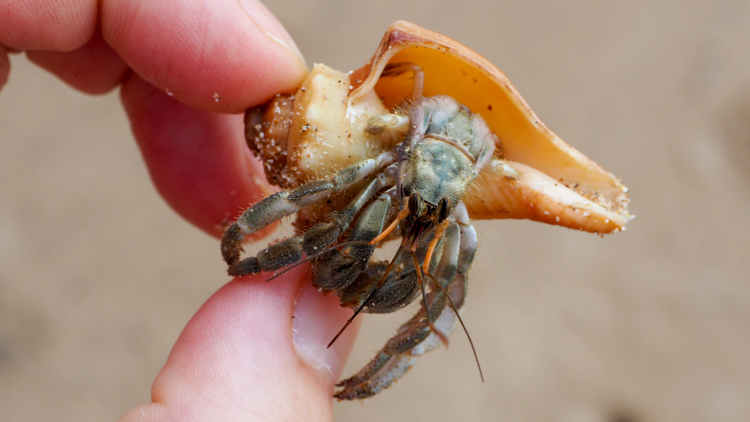
Ghost crabs flitted across the white sand, some of them quite big. There was a dead horseshoe crab, coconuts sprouting along the top of the beach, and hermit crabs in every sea shell.
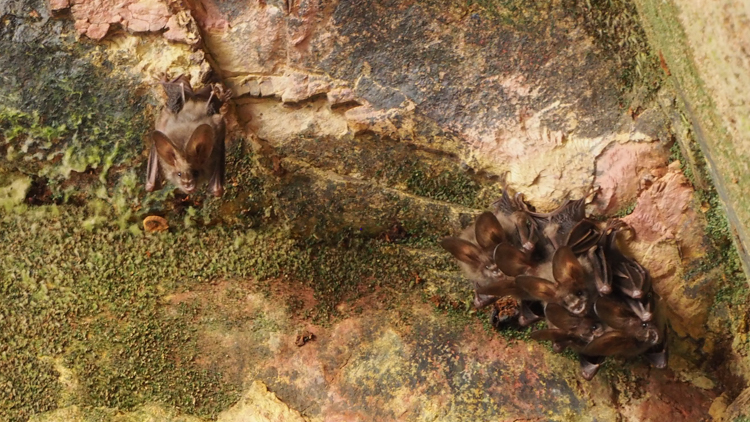
In the cave, which was easy to access since the tide is low, we found a colony of bats.
At low tide, there are a lot of exposed broken coral pieces from the 1957 storm that destroyed the reef here, which makes swimming a (razor) sharp proposition. We managed to find some clear sand patches, though.
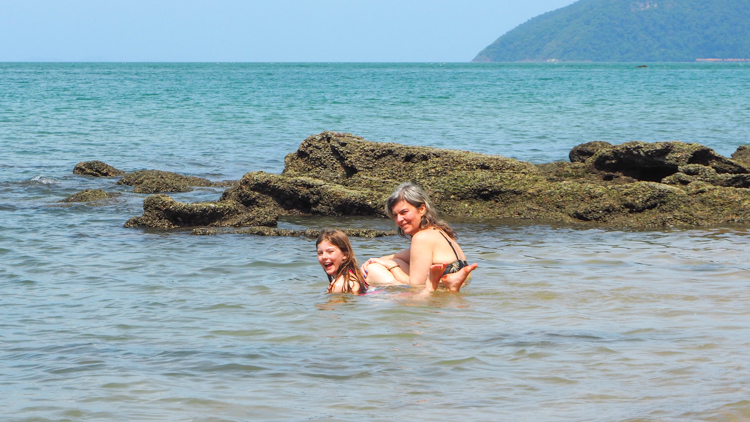
There is one other thing that this beach is famous for. Due to its position within the tidal flows, it is notorious for collecting up all the waste plastic dropped in the waters of the Langkawi islands. The company that owns the island makes a weekly effort to clear the beaches and the cave, and in fact Red Rock Beach was relatively clear of macro debris.
A short walk past the end of the sand, though, and we got a good taste of the scale of the problem that they have to deal with.
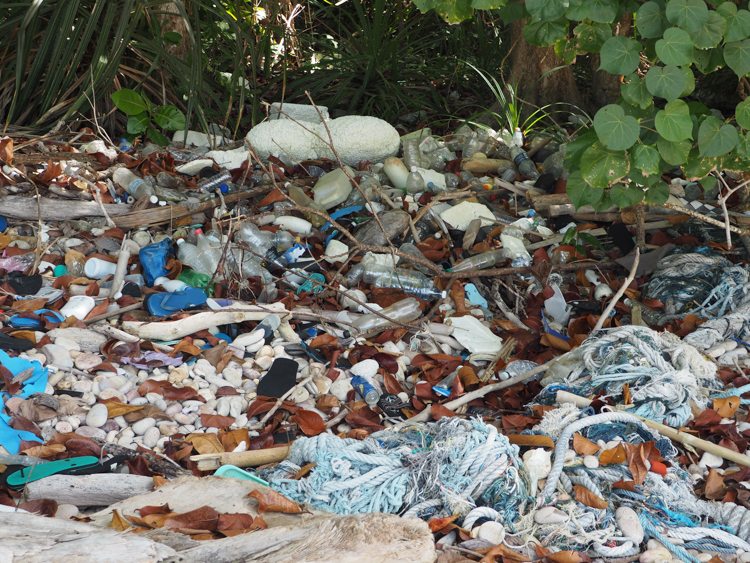
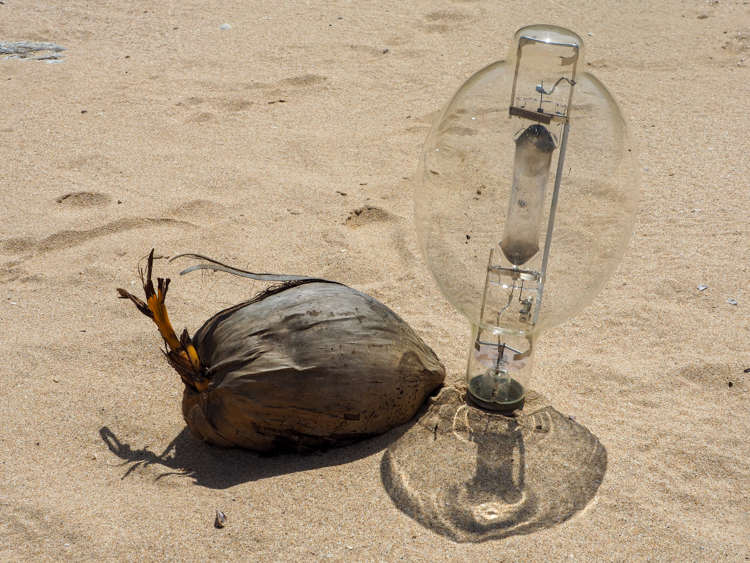
There was a large blue barrel at the end of the track, into which I deposited some larger items, such as the enormous light bulbs presumably dropped by squid fishers.
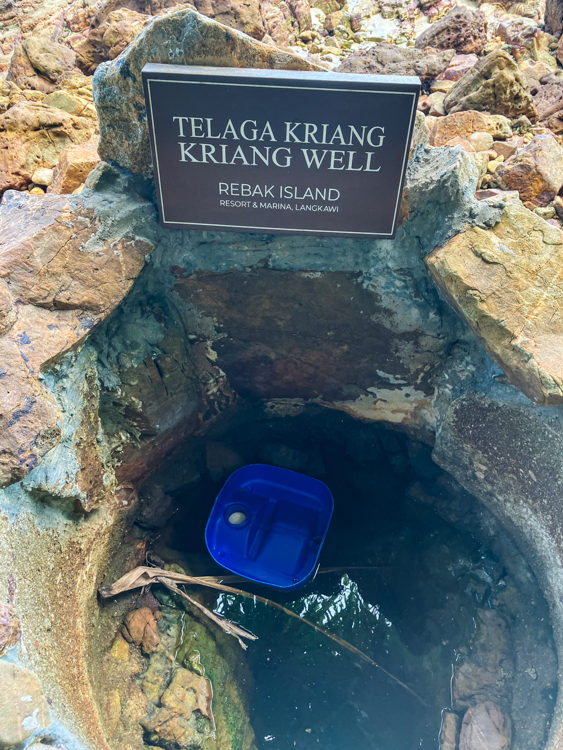
Telagia Kriang Kriang Well
On the way back from Red Rock Beach, we visited the Telagia Kriang Kriang well, marking the freshwater spring that was the trigger for the initial colonisation of Rebak Island. The well is on the beach and close to the sea, but the water is sweet and fresh.
Nearby was a troupe of crab-eating monkeys. Initially only a few dared approach, then as we sat quietly, young males appeared, followed by nursing mothers with babies.
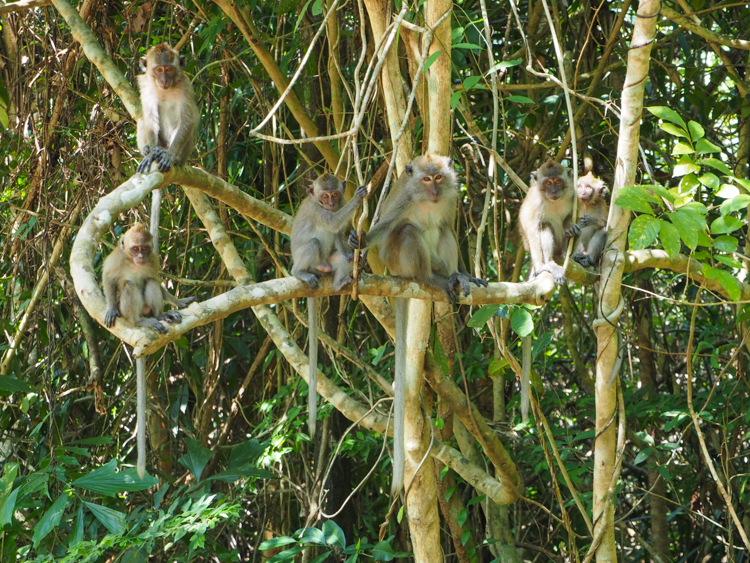
Finally, the patriarch, resplendent in his furry ruff, decided that enough was enough and bared his teeth, and we quietly made our way out of the jungle, and back to civilisation.