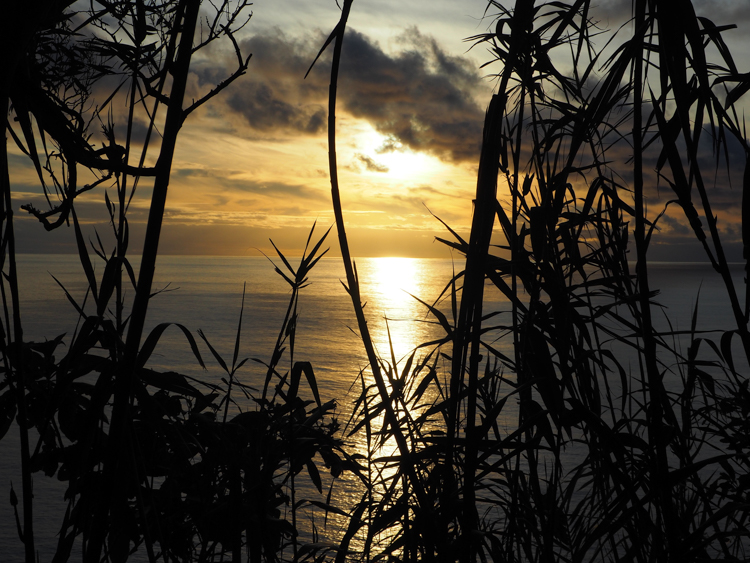
On the island of Sao Miguel in the Azores, a ‘Rocha’ is a smallholding clinging to the side of the piled volcanic detritus on the edge of the island. This land is largely vertical and hard to reach, but the westward-facing cliffs provide a favourable microclimate for fruit, and the volcanic ash and plentiful fresh rain water sustain a fertile soil. There is no vehicular access to a typical Rocha, so traffic is traditionally by mule. My mother and I spent some time exploring on foot.
Rocha da Relva
The path started out relatively flat as it cut down through layers of volcanic ash, or tuff, but soon began to descend steeply, the surface underfoot concrete inlaid with large volcanic stones for grip.
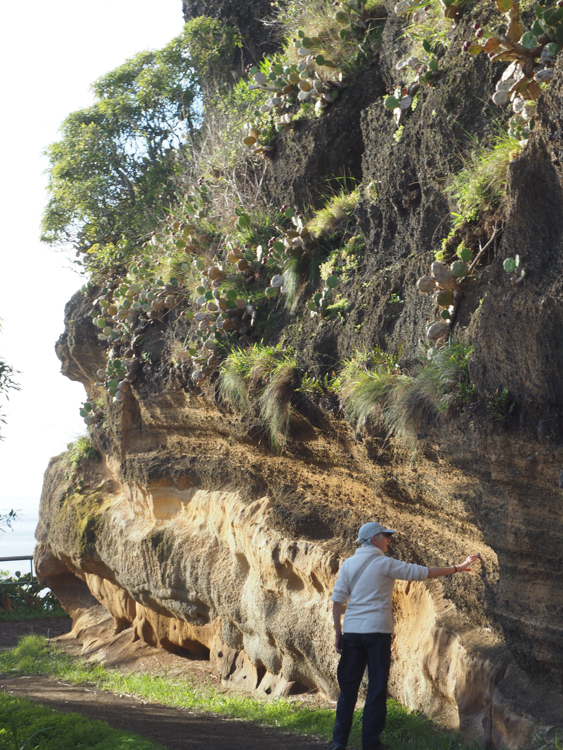
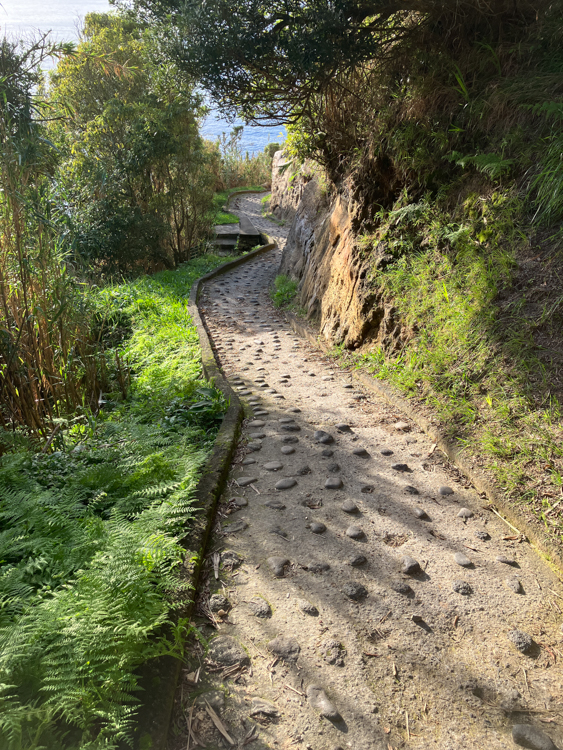
Not far down, the trail splits with a fork toward Rocha da Cascalho, but we followed the main path toward Rocha da Relva. Occasionally, a local passed on a dirt bike, and it was only after he’d been up and down a couple of times that we realised that he was running a taxi service to and from the village at the bottom.
We followed the path as it zig-zagged down the cliff, with Opuntia cactus growing out of the volcanic ash. Occasionally, a terrace had been hacked out of the rock, and planted with fruit, mainly grape vines but with a smattering of bananas. Apart from the occasional cultivated terrace, everything was vertical.
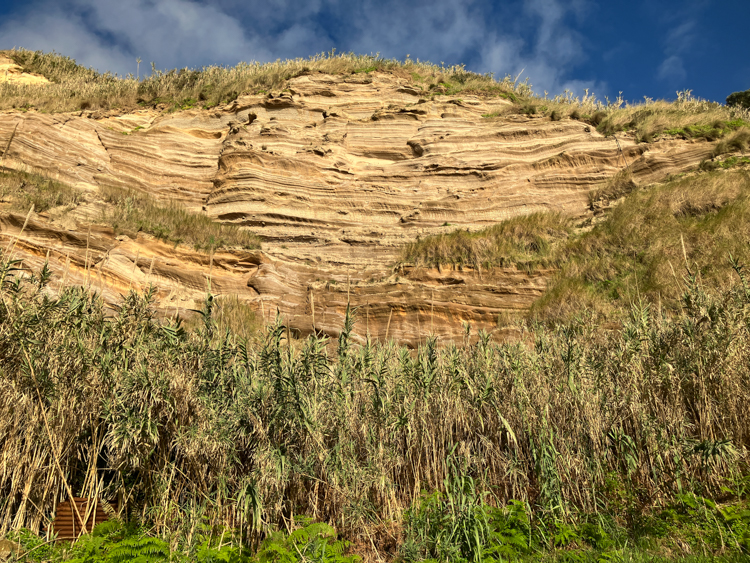
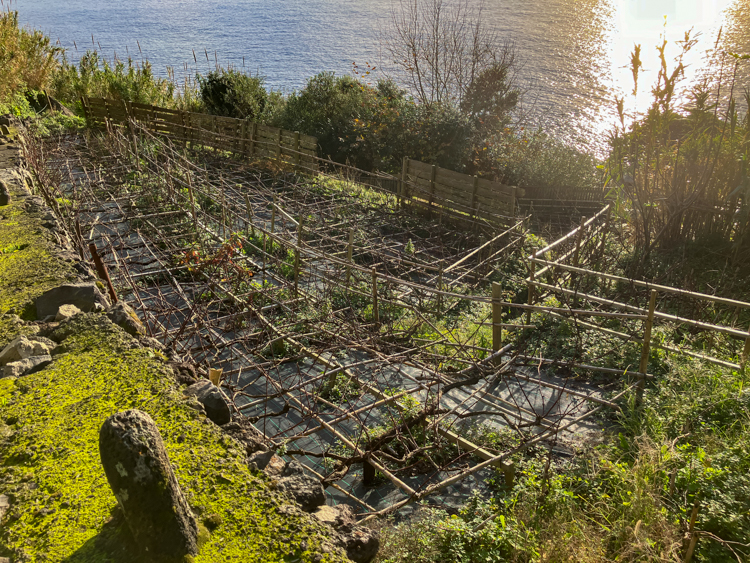
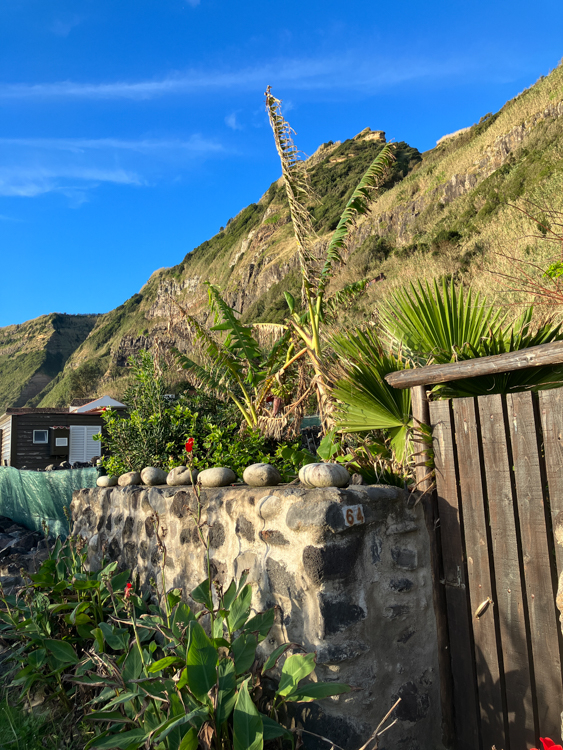
The various tourist guides talk about the concrete path, the views over the Atlantic, and the availability of toilets, but they don’t tell you anything about the village that you are walking to. It takes some effort to get there, but it really is a lovely place. Little family houses are wedged in against the unstable cliffs, surrounded by grape vines and decorated with flotsam from the ocean, sometimes gaily painted but always showing wear from the prevailing wind.
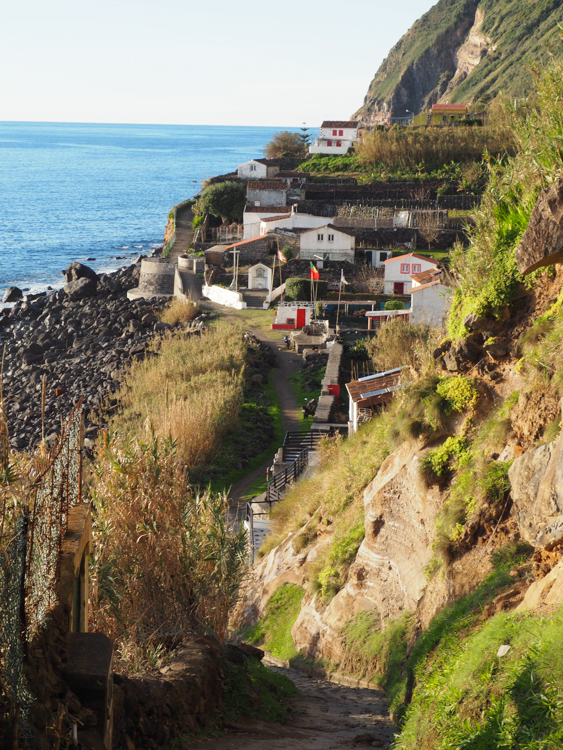
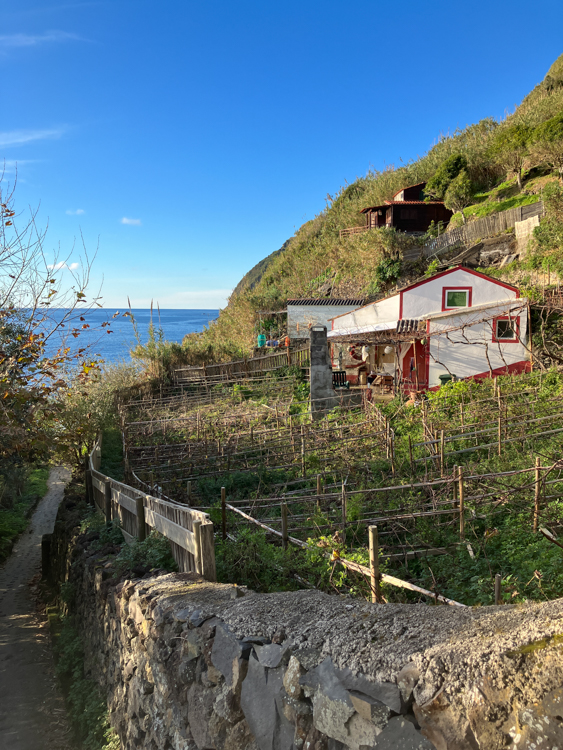
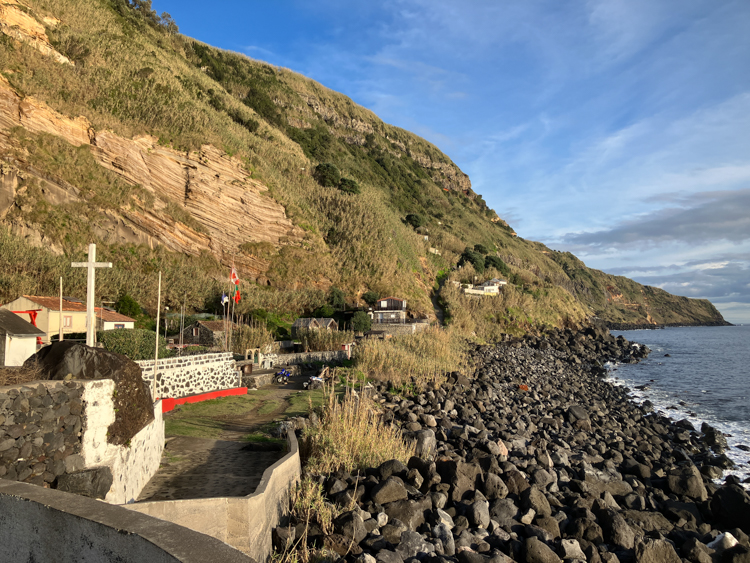
If you had the opportunity to live in one of these houses, perhaps to repair one of the ruins and restore its fruit terraces, using only material from the beach or which you had personally manhandled down the path, then you would probably stay forever. I inferred from some brave but tattered flags on some of the properties, that several English, Canadians, and Americans have already done just that.
We followed the remainder of the path as far as the cliff that marks the end of the village. On our way, we passed a couple of other hikers, sitting mesmerised and watching the sunset, lost in the crash of the waves upon the boulders.
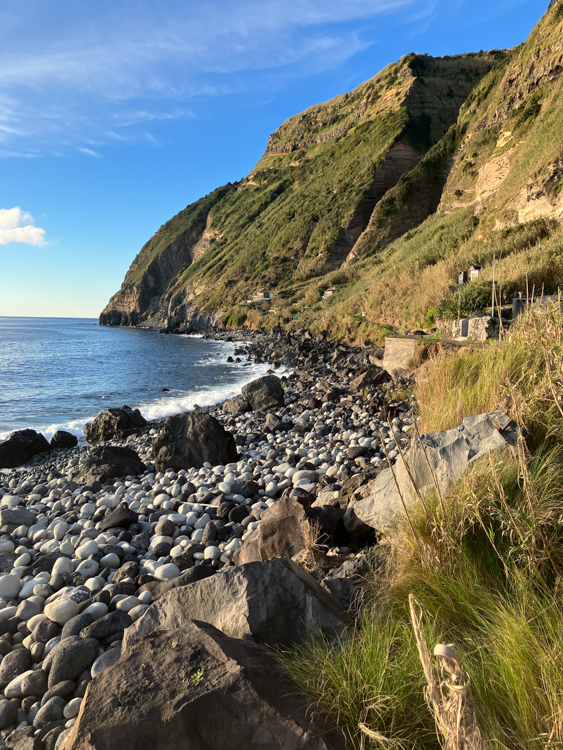
It is a unique sound. The beach is comprised of large round boulders which roll and grind with every incoming wave, making an interesting rasping noise like the tearing of cloth, as each one sucks back out to sea.
We climbed back to the top of the path as the sun was dipping toward the horizon, passing several young couples walking down hand in hand to watch the sunset.