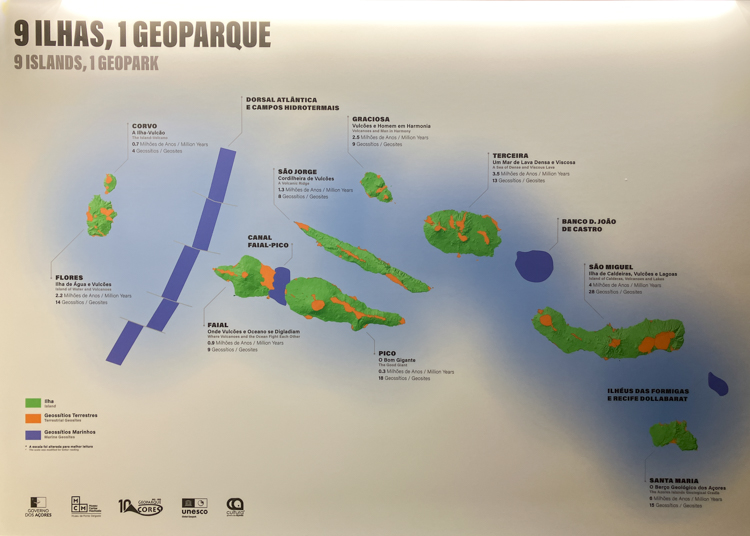
The island of Sao Miguel is one of the Azores group, a handful of volcanic islands generated by geological activity in the Mid-Atlantic Ridge. The geology is similar to Iceland in that the magma is very close to the surface, and so Sao Miguel is well equipped with hot springs and dormant volcanoes.
Furnas
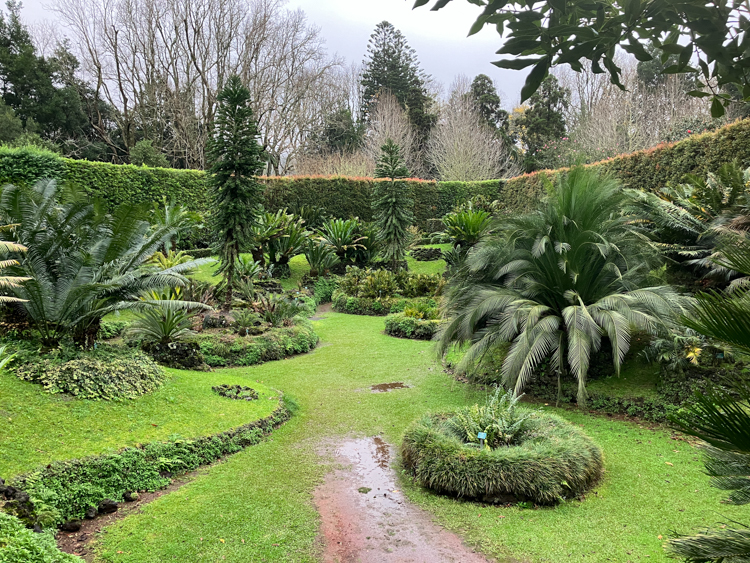
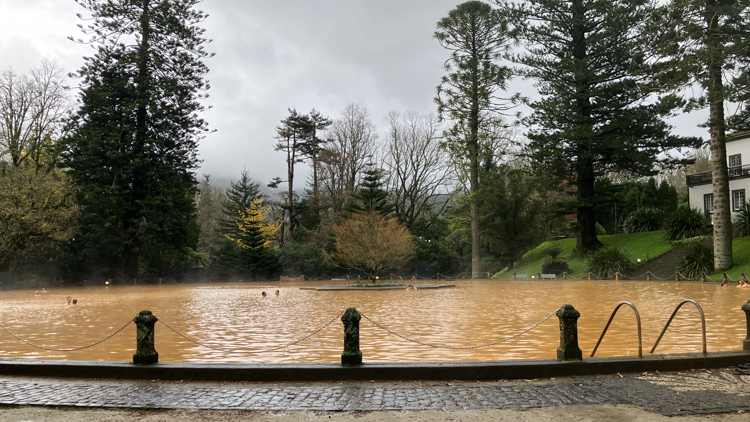
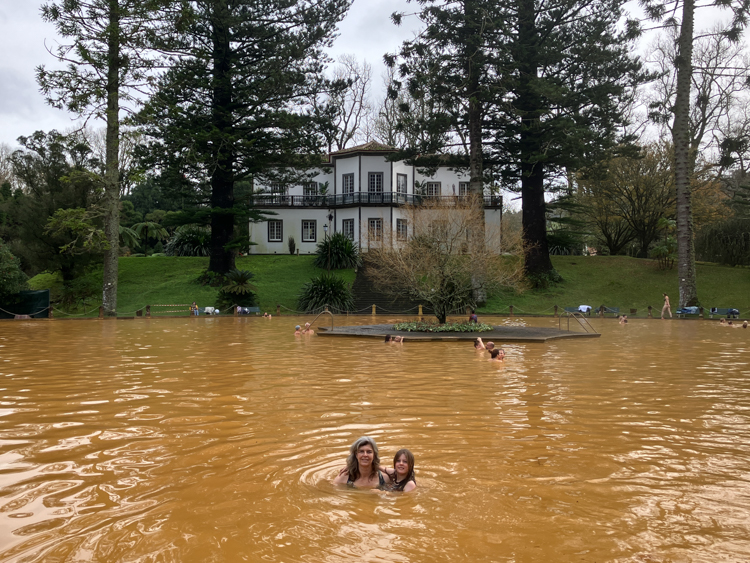
Over to the Eastern side of the island is an area of hot springs close to the town of Furnas. A major feature of the town – whose name translate to ‘caves’ – is the Terra Nostra botanical garden built around a stately home and a thermal iron-rich pool.
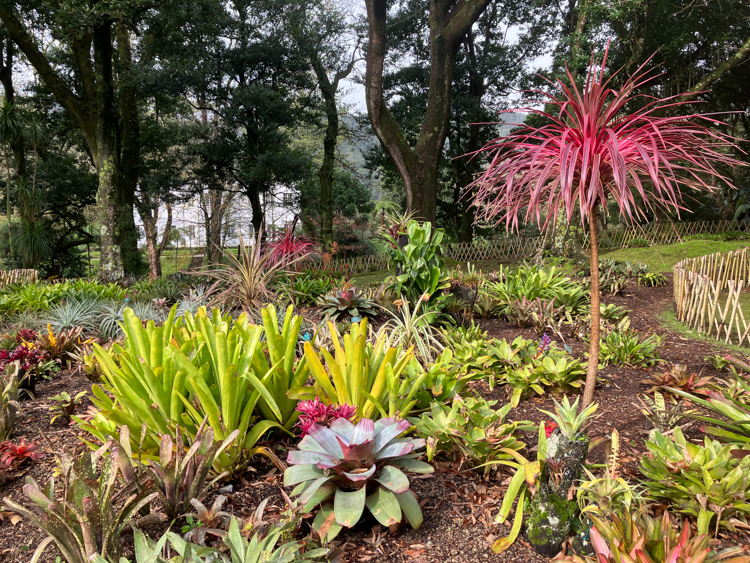
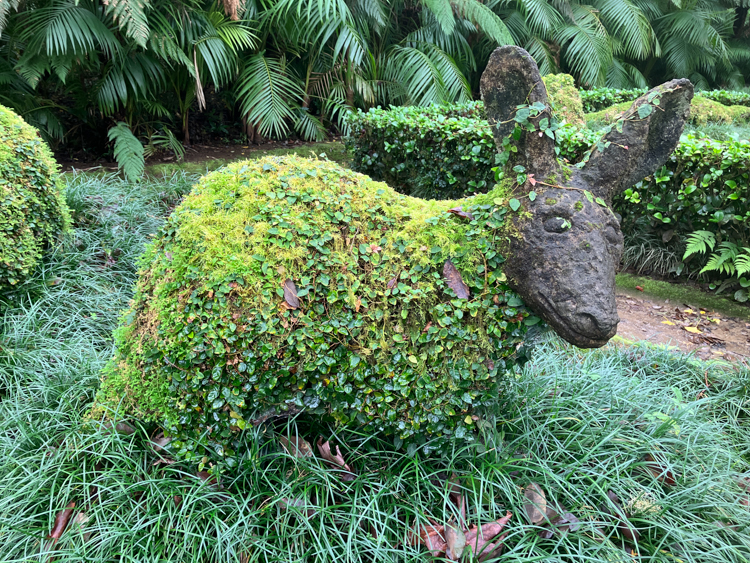
The vegetation is lush and green, and the carefully manicured plants, both from the Azores and from around the world, are beautifully laid out in themed jungle gardens. Winding trails lead past hot and cold streams, little grottos, and avenues of camellias. Occasional animal sculptures, furred with moss and ivy, peer from the undergrowth.
The centrepiece is the shallow iron-rich thermal pool, which is very popular for bathing. The water is around 39 degrees, and about neck deep throughout, so that the preferred method of locomotion is a slow gentle walk with only your head showing above the opaque brown water. Lots of couples moved quietly together around the pool, and we joined them.
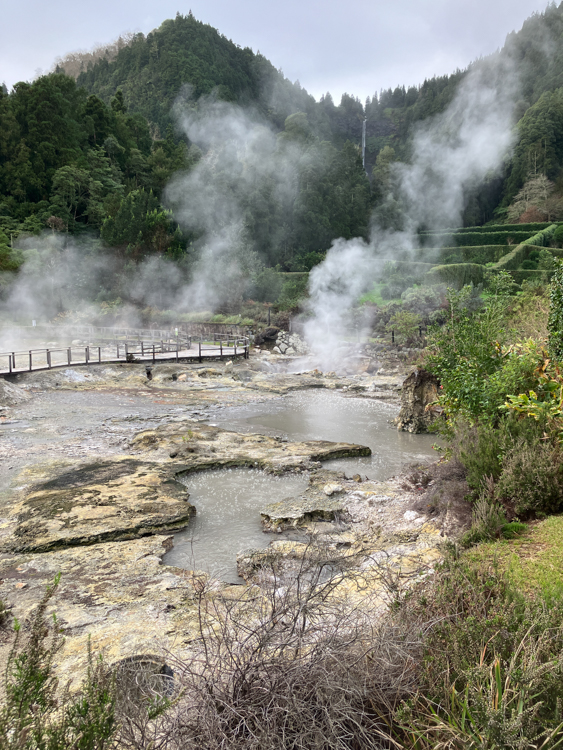
Nearby are the Caldeiras da Lagoa das Furnas, a geothermal area of bubbling mud and hot springs.
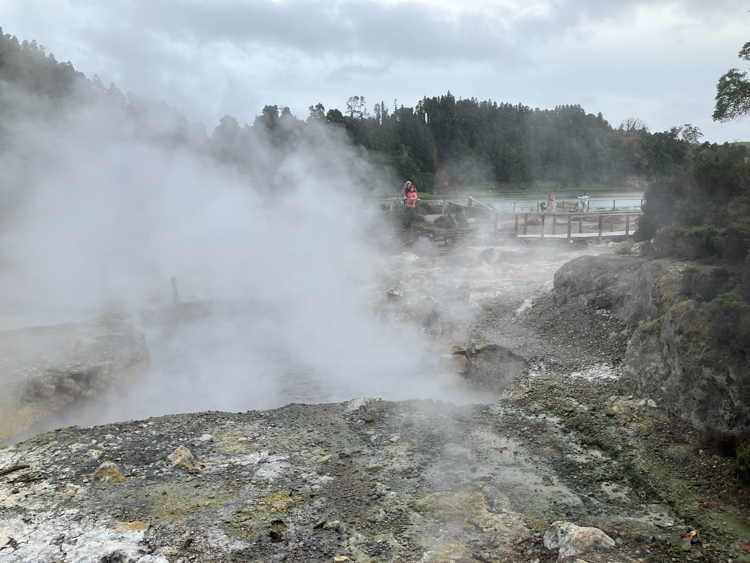
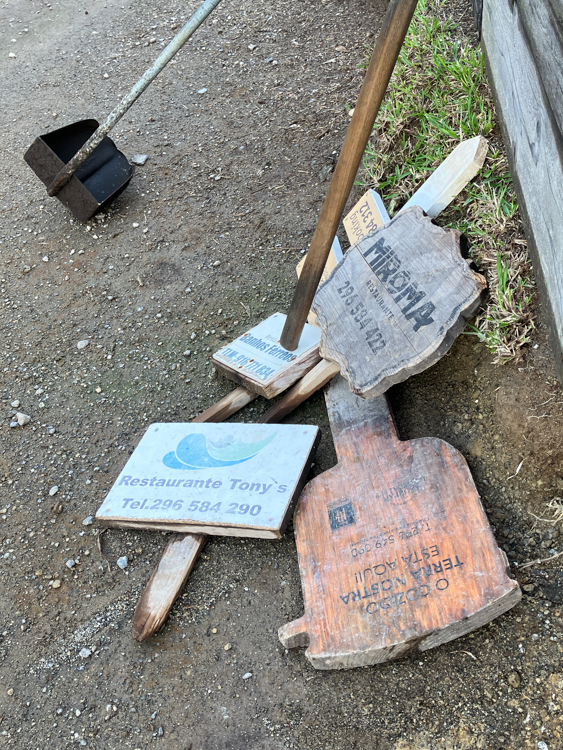
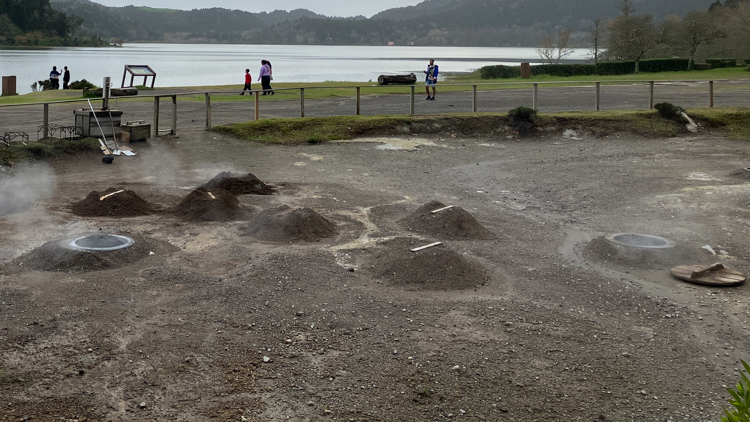
One of the curiosities of the area is that holes have been dug down into the hot mud, and local restaurants bring pots to make a stew, Cozido nas Caldeiras. Unfortunately you can’t purchase any at the site, but we did get to see the holes, cages and lids that are used to prepare the meal.
Seta Cidades
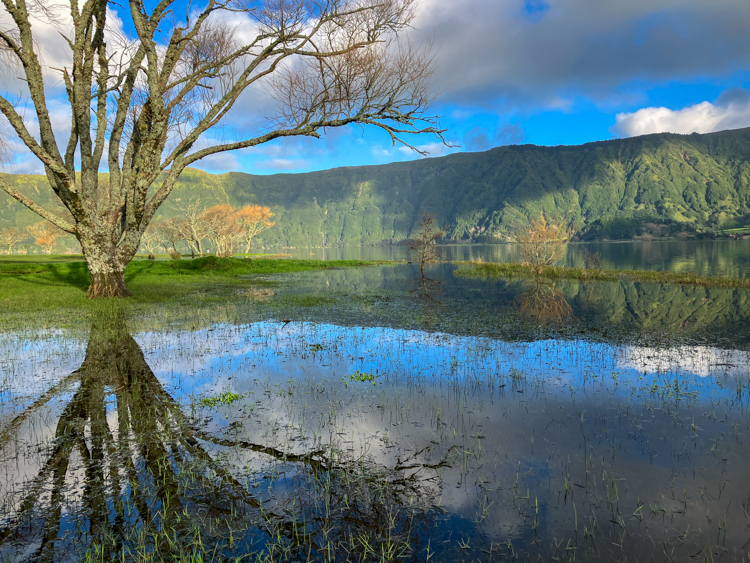
Seta Cidades is a small town to the West of the island, that was built a very long time ago on the shores of two overlapping caldeira lakes. The lakes are famed for being different colours, and are known as Azul and Verde. We have seen photos that show that they can be strongly blue and strongly green, but on our visit, they were both the same colour.
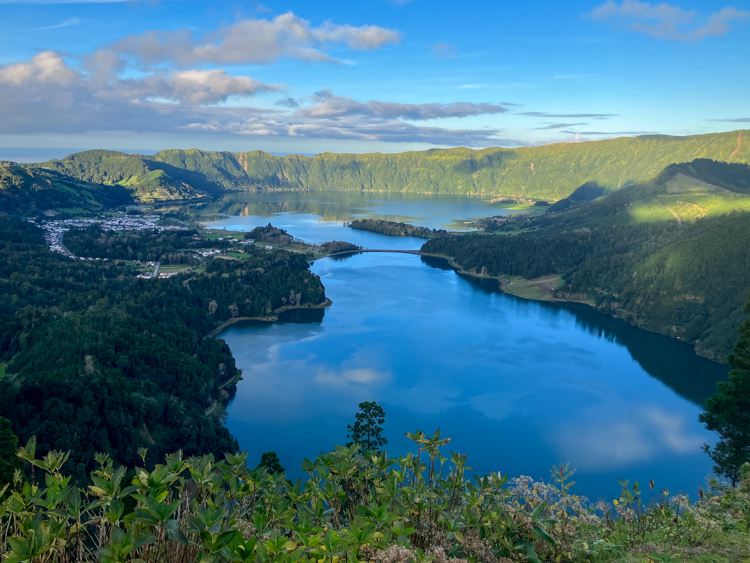
These two calderas are only the lowest of a large number of volcanic cones in the area, most of which are accessible via walking trails.
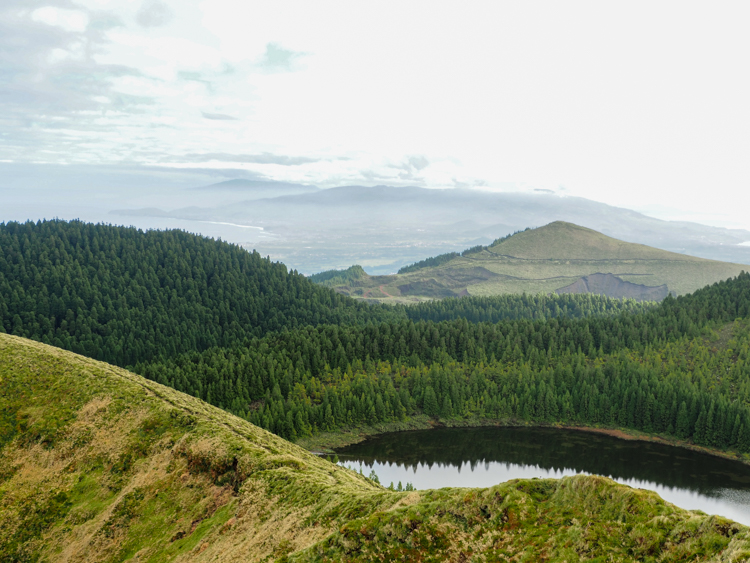
We took a circular route up from Lago do Canaria, circling a number of volcanoes, and then back down again. The waymarking was excellent and the path pleasingly natural under foot, with just the occasional wooden step to get across some of the deeper rain gullies.
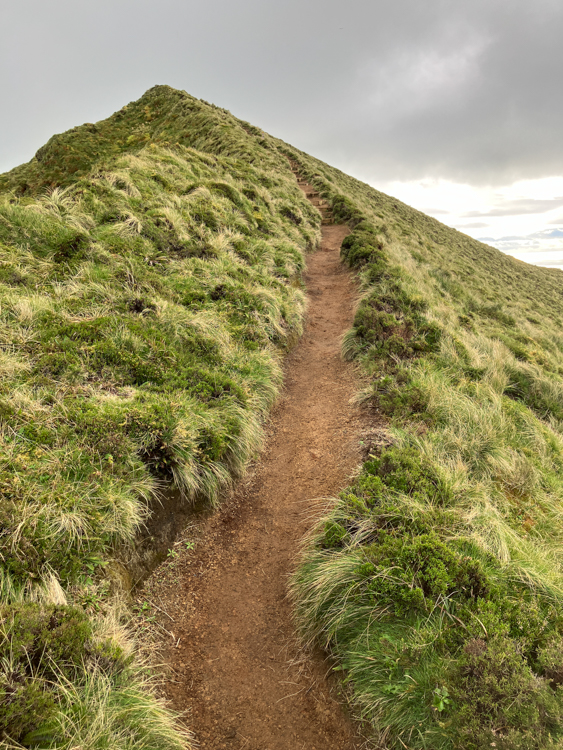
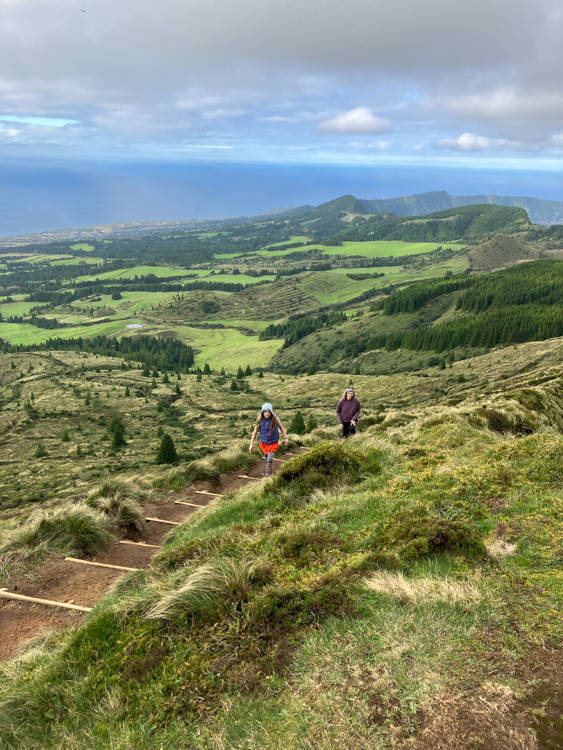
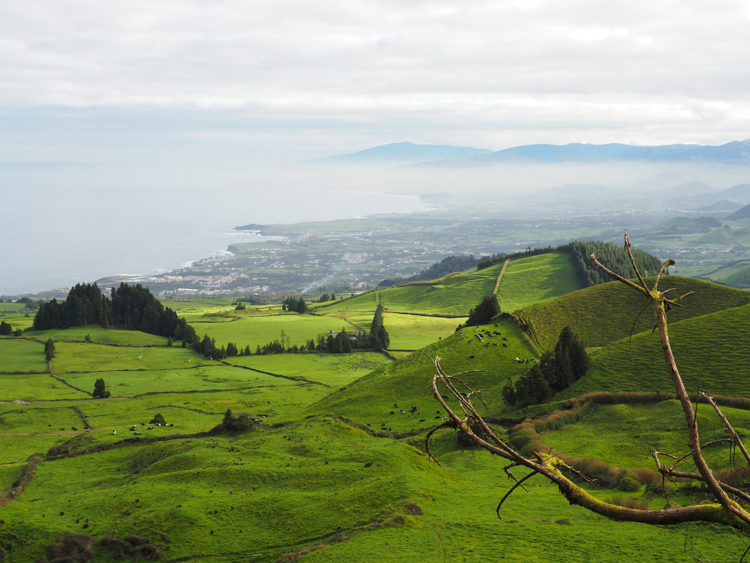
The trail is very exposed, and would probably be a bit fierce in heat or storms, but for us the weather was perfect.
From the top, most of Sao Miguel was laid out below us. The surrounding sea seemed to go on for ever, merging with a sky full of scudding clouds. Somehow there seemed to be too much ocean, with the horizon very high in the sky.
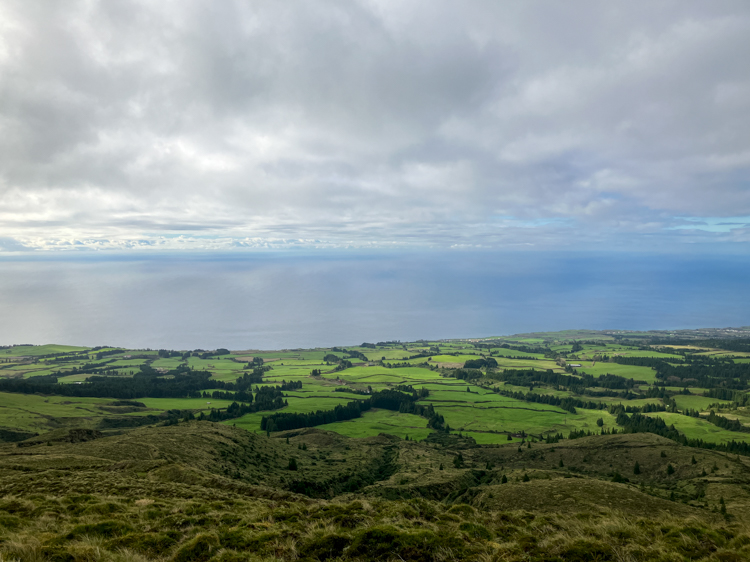
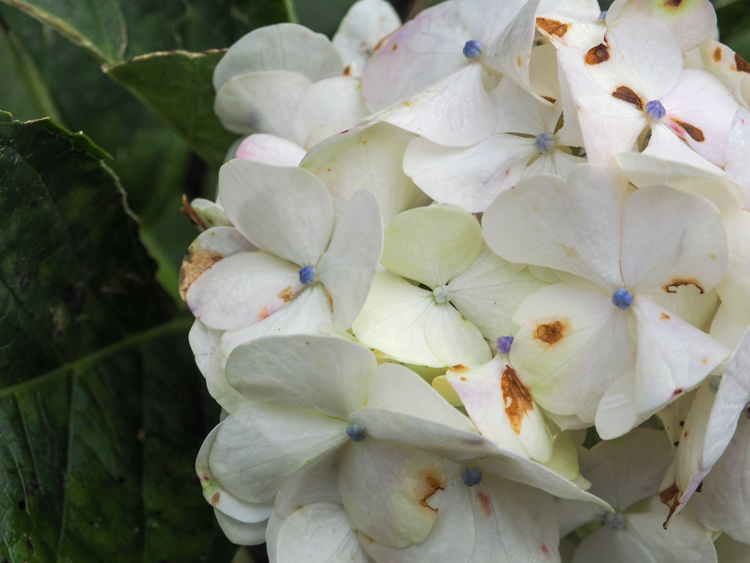
The volcanic slopes are covered in lush grass, stands of conifers, colourful ground-hugging flowers, and natural hedges of hydrangeas. These latter are common on the island, and those at sea level bear the usual pink and blue blooms, but up here the flowers are white.
We drank from the cool clear water of one of the caldeira lakes, and then hiked up round to Miradouro do Pico do Paul for views across Lagos Empadadas. All beautiful.
When we got back to the car, there was a flyer behind the windscreen wiper for the Green Love restaurant on the shores of Lake Azul. Since we needed to eat, we headed that way, and found a lovely little cafe with a large outdoor terrace and a green space right down to the lake, and I ordered a traditional pork steak cooked in a sweetish pepper sauce, washed down with local vinha verde.
A Porta do Diabo
Far to the west of Sao Miguel, at Ponta da Ferraria, a stream of volcanic hot water bubbles into the sea via a little cove. Big rollers wash in unobstructed from the Atlantic, but the water is bath-temperature, and the waves provide a relaxing back-and-forth motion if you stay in the open channel.
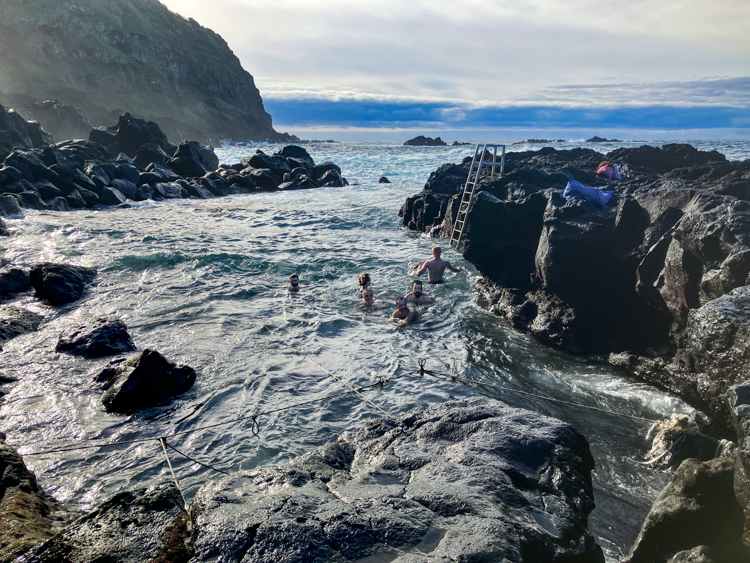
Most people, however, huddle in the network of ropes right by the rocky shore, where the water is hotter but the swell can get a bit sloppy.
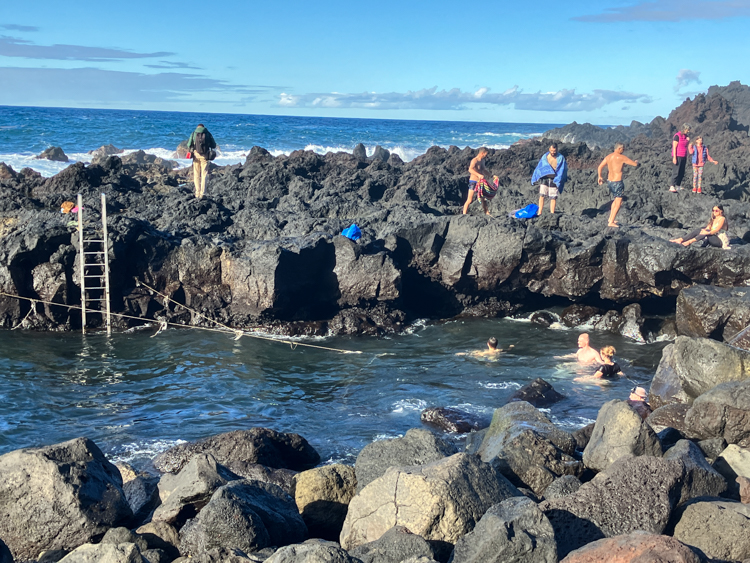
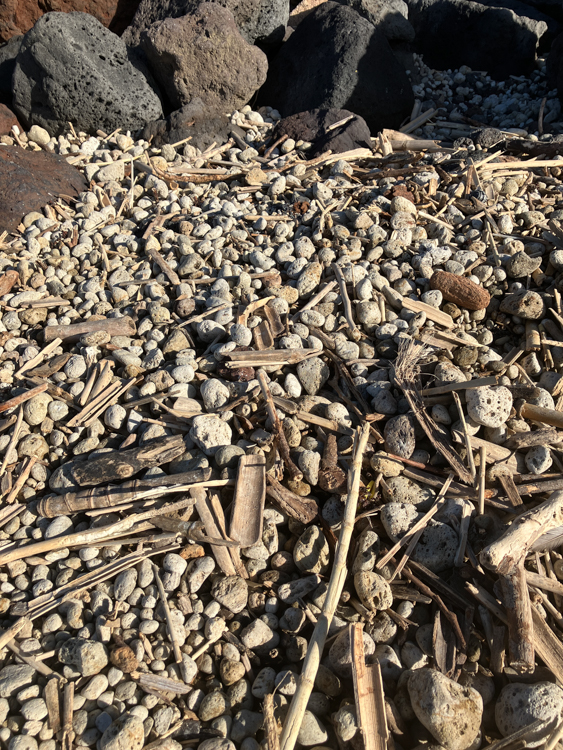
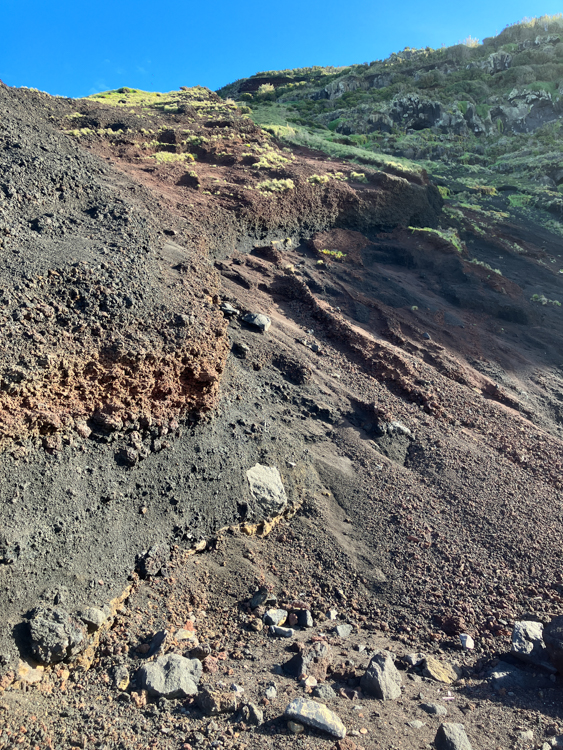
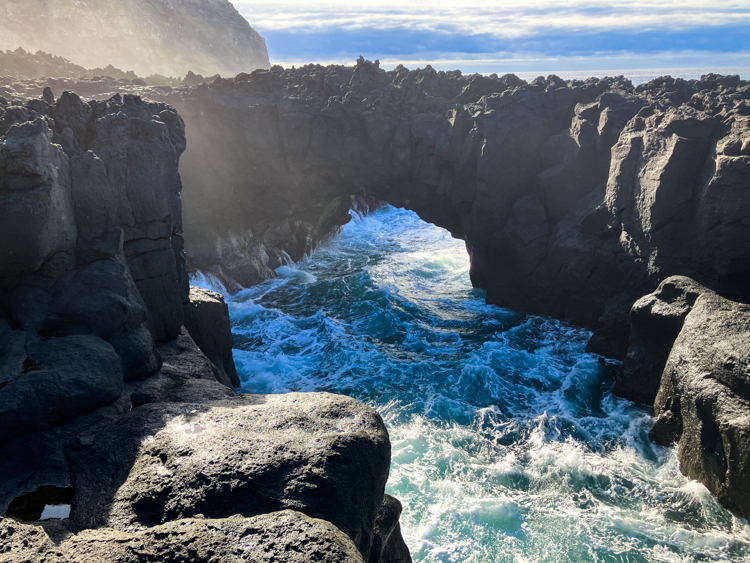
After a long and relaxing bob in the warm turbulent water, we had a snoop around the surrounding lava fields, where there was a lot of floating pumice, immense piles of ash, and a nice volcanic arch.
Nice work buddy. Interesting read and makes me want to go there.