After our impromptu fuel stop in Eden on the Australian mainland, we had a weather window of about three days in which to get across the Bass Strait and into some kind of safe anchorage in Tasmania.
We were expecting to run before a northerly, then beat into a southerly, then a northerly again, with the forecast wind speeds as variable as you might expect when crossing three distinct weather systems.
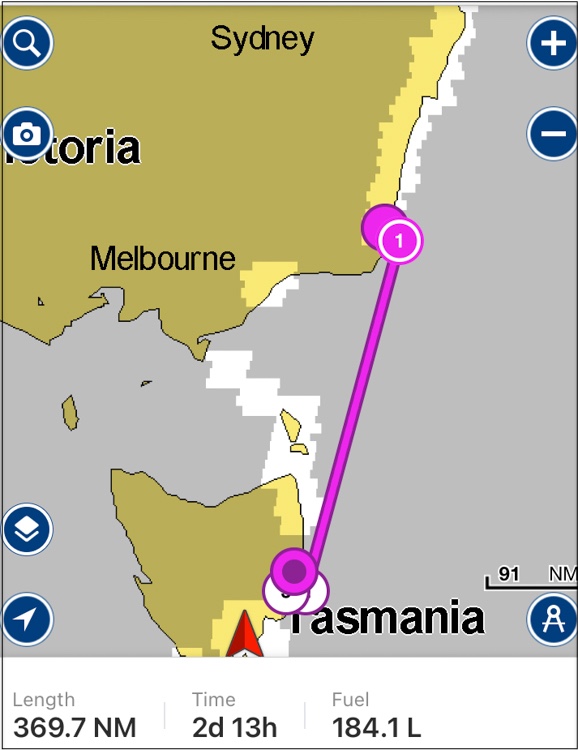
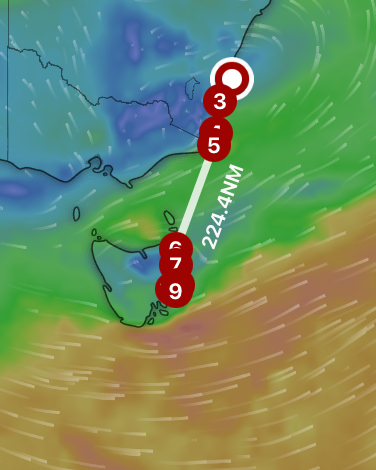
Leaving the heads out of Eden in the mid afternoon, we had comfortable following winds until early evening, when they dropped below 10 knots and we couldn’t maintain our intended 5-knot boat speed, whatever sail plan we tried. We motor-sailed for a little with the engine just ticking over enough to give us those crucial extra 2 knots, then later turned it off again as the wind picked up. That pretty much set the scene for this initial part of crossing, with variable winds and variable seas.
The sea state got very sloppy in the shallower areas as we entered the Bass Strait, but the wind was generally good, until suddenly everything went to flat calm.
We made a couple of short videos.
On the AIS, we could see some cargo ships clustering around the SE corner of the mainland, but to the naked eye there was not a single other vessel to be seen.
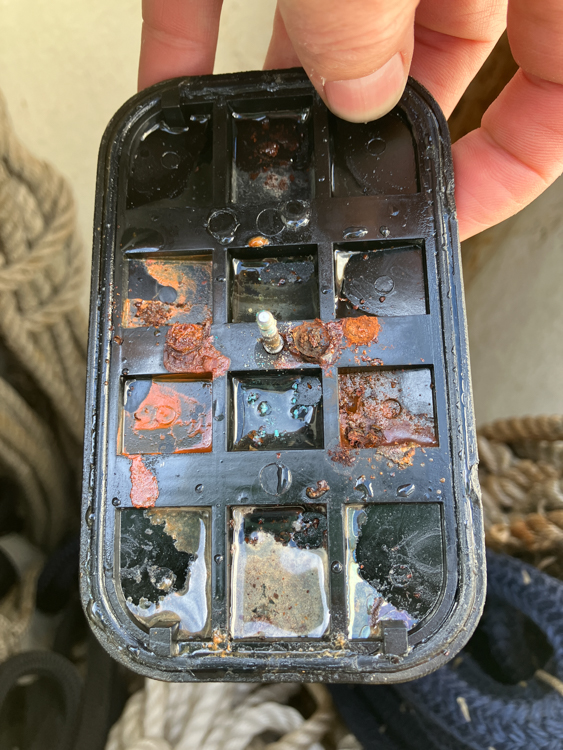
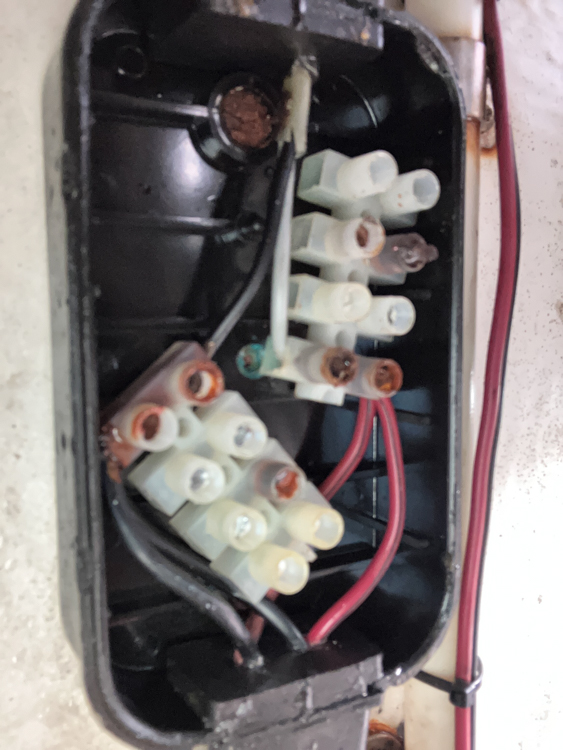
Forging south with following seas of about 1.5 metres but with the occasional set big enough to surf down, I went forward to the bow to try to fix one of the navigation lights that had stopped working the previous night. I spent a bouncy hour in the anchor locker, and successfully replaced a few runs of cable, but in the end discovered that the cores were rotten with salt all the way from the light unit back to the junction box, which had for some reason been wired with indoor terminal blocks, and was anyway itself full of sea water. We have a secondary set of nav lights on top of the mast, so I delegated that task for another day.
We had three alternate anchorages up our sleeves in case the weather broke; Musselroe Bay, Eddystone Point, and St Helens. The first two are really roadstead anchorages in case of a strong southerly change, and the last one has a tricky entrance bar that can only be negotiated at high tide and with local knowledge. Our preference was to keep going, but Vestlandskyss wasn’t currently set up to give us weather updates without a cell signal, so it was good to have some escape plans.
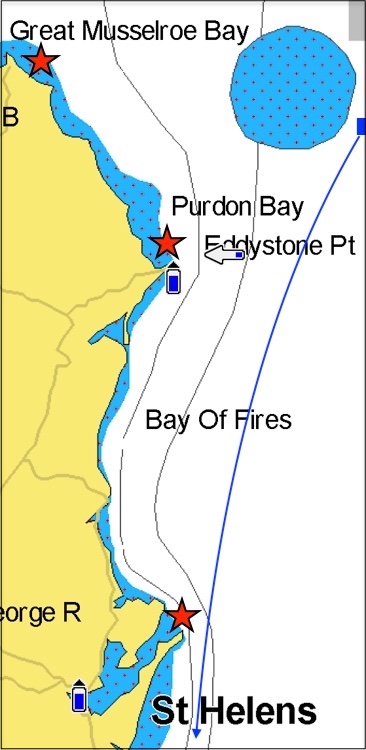
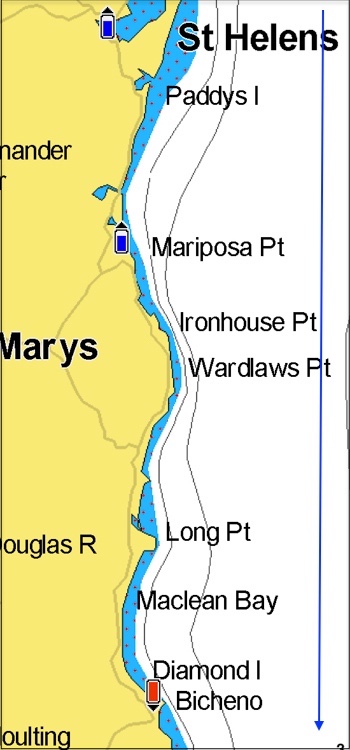
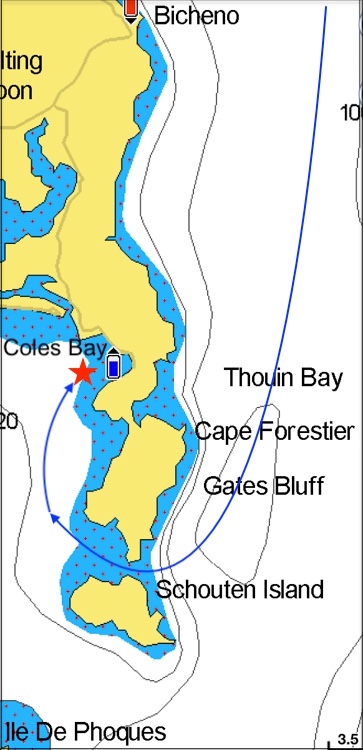
As we prepared for the second night watch of our Bass Strait crossing, we were 170 miles from our chosen destination, Coles Bay on the Freycinet peninsula. The seas were a bit lumpy, but tended to albatross and dolphins.
It was a quiet night of motoring in light winds and smooth seas, but at around 05:00 the southerly picked up again. I helped Bronwyn to put in a reef, and as Vestlandskyss pulled ahead, I went below to get some sleep.
A little later, I was awoken by a loud and insistent banging from somewhere forward. Throwing on my life jacket, I raced to the bow, and discovered that the anchor had jumped off its roller and was smacking into the hull with every wave. We hove to while I hauled it back on board and secured it. There was a fair bit of minor damage where the tip had been crunching into the fibreglass, but there was nothing to be done about that now.
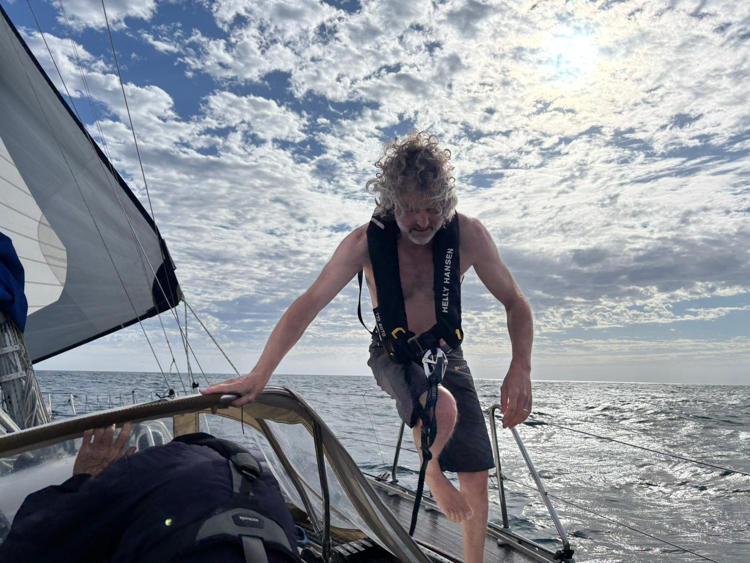
The wind had increased to more than 20 knots, so we put in a third reef and I went forward again to raise the staysail, which was stowed on deck. The seas were getting lumpy again, with waves breaking over my head on the foredeck. The staysail calmed things down a bit but it was a fast beat into rising seas.
I dried off and went to bed.
By mid-afternoon we caught a glimpse of Mt Wilson on the horizon. We could see Tasmania! We briefly picked up a cell tower, and the forecast hadn’t changed dramatically, so we made the decision to tuck in closer to the shore where the winds were lighter, and keep on going.
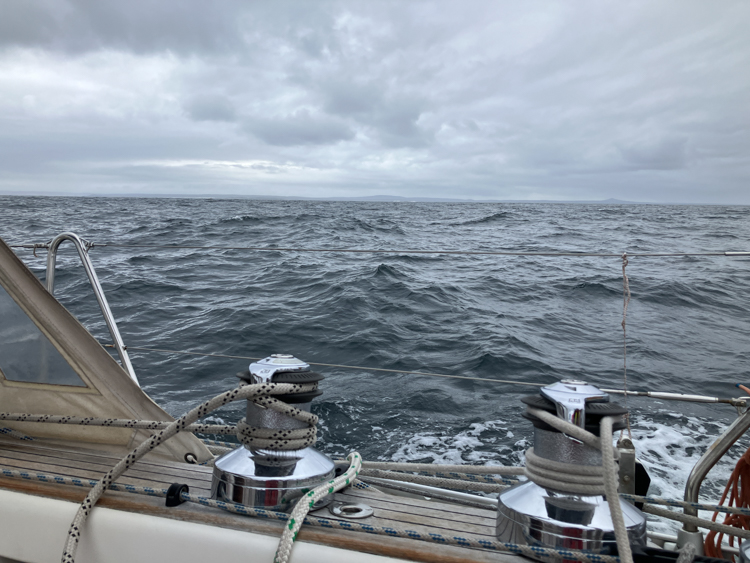
After a welcome roast lamb dinner, we set up for the third night, motorsailing in pitch darkness with a 2 metre swell on the beam. I’d rigged a preventer in preparation for a forecast northerly change, but we didn’t need it as we continued beating into the persistent strong sou’easter.
As the sun came up on our final day of passage, we were abreast of Schouten Island. Our plan was to sail Schouten Passage between the island and the Freycinet peninsula. The passage is half a mile across with not too many dangerous features, but as we prepared to tack, we found that the port staysail sheet (the line that we would use to control the sail, and which we hadn’t used for days as we had been consistently on the other tack) had come adrift in the night, and had migrated forward and wrapped itself in an impressive snarl around the clew. The wind was in the high twenties, far too much breeze to launch the oversized genoa, so our only available sail was the reefed main.
Going into wind without a foresail doesn’t give you a great deal of control. We considered motor sailing, but the fuel gauge is flaky at best and was bouncing on the bottom pin. Our calculations from the ship’s log did not give us enough certainty that the remaining fuel would last. We did try to heave to and fill the tank from jerry cans, but we had opposing swell and roaring whitecaps and we were tired.
We decided to round the southern shore of Schouten Island instead, taking the time to untangle the staysail sheet along the way.
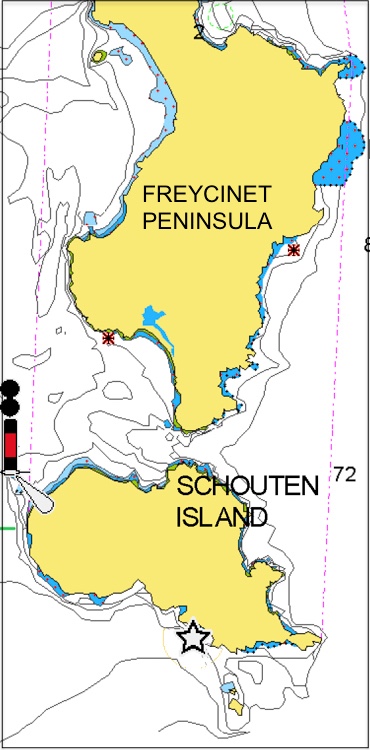
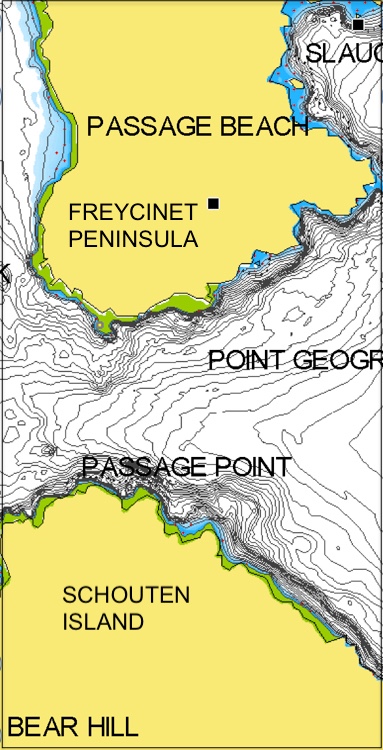
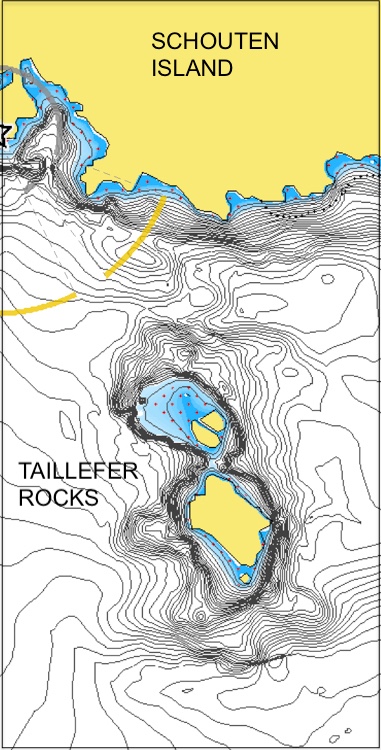
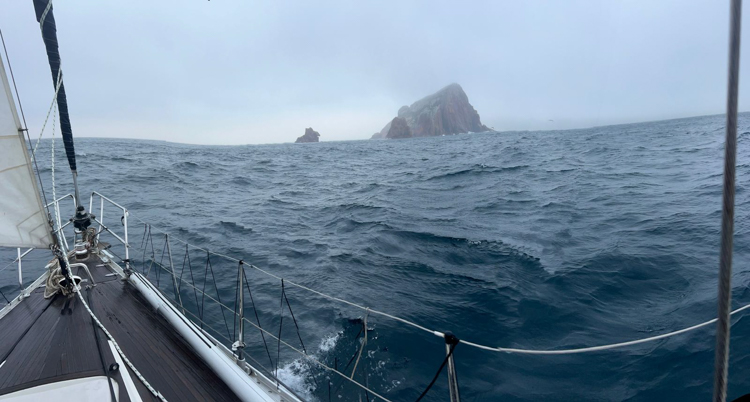
Taillefer rocks loomed spectacularly out of the mist, and then we were round into the calm of Great Oyster Bay.
We topped up the fuel tanks – confirming that they had indeed been quite empty – and headed north toward Coles Bay. The sea was calm in the lee of the Freycinet Peninsula.
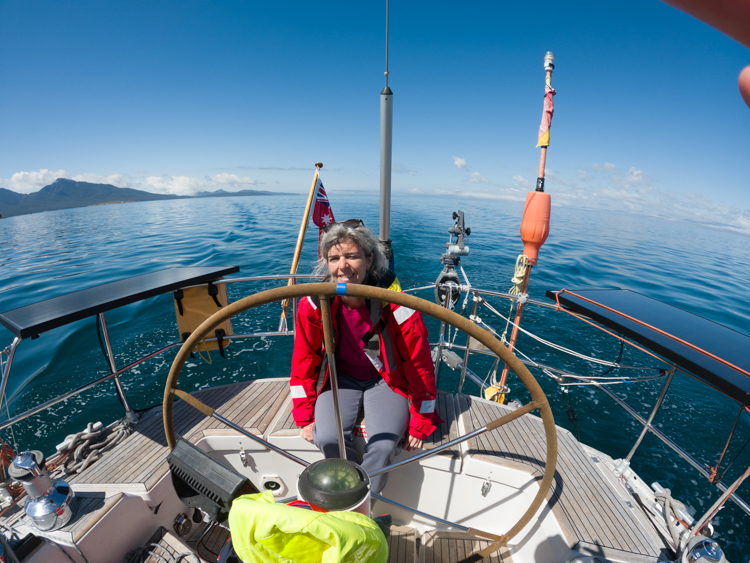
Dolphins came out to play in the crystal clear water.
We had crossed the Bass Strait. I had booked a club mooring in Coles Bay, so we tied up and went for a swim and a stroll along the beach, in preparation for a blissful night of uninterrupted sleep.
Well done! Especially the dolphin ending!!!