We lifted the anchor chain from where it was lying stretched out in the shallows off Ko Kood, and motored south around the nearby point to Ao Taphao Beach, close to where we had finished up the night before.
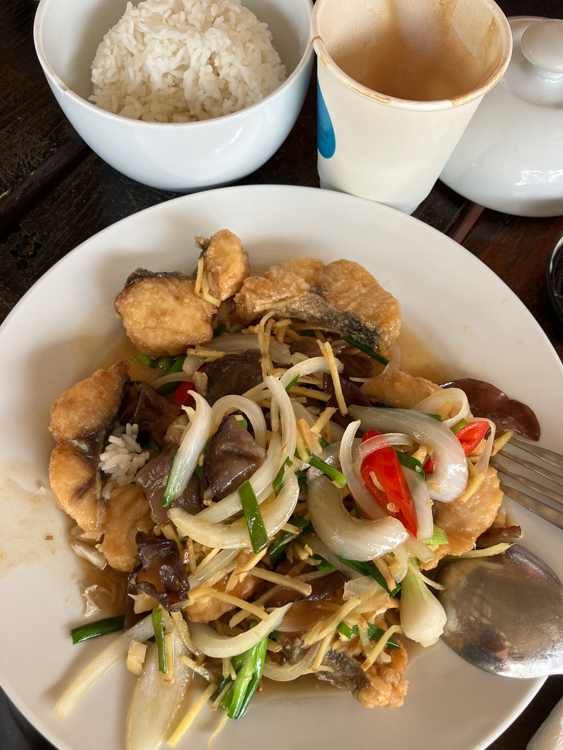
We didn’t particularly want to return to the Paradise resort, but there was a restaurant, Sea Far, next door. It appeared to be closed, but the staff were delighted to welcome us in, and said that we could choose anything we liked from the a-la-carte menu. We had a great late breakfast; I chose fried fish with ginger, washed down with a beautiful tall macchiato.
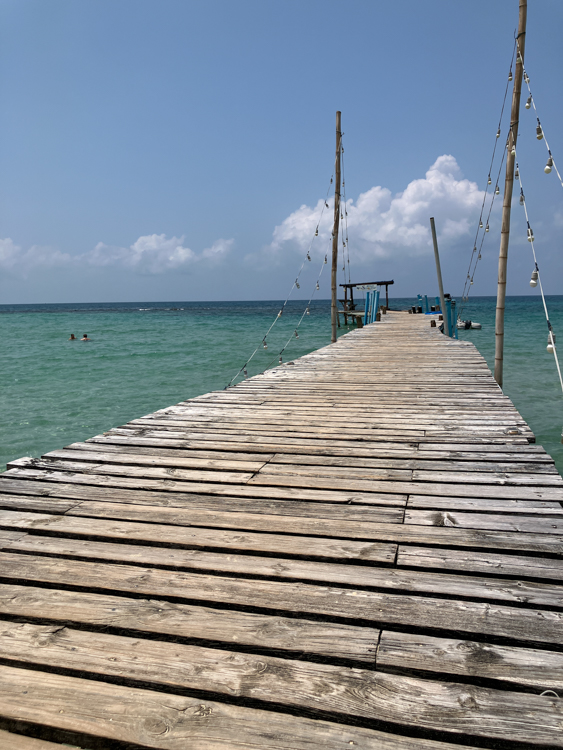
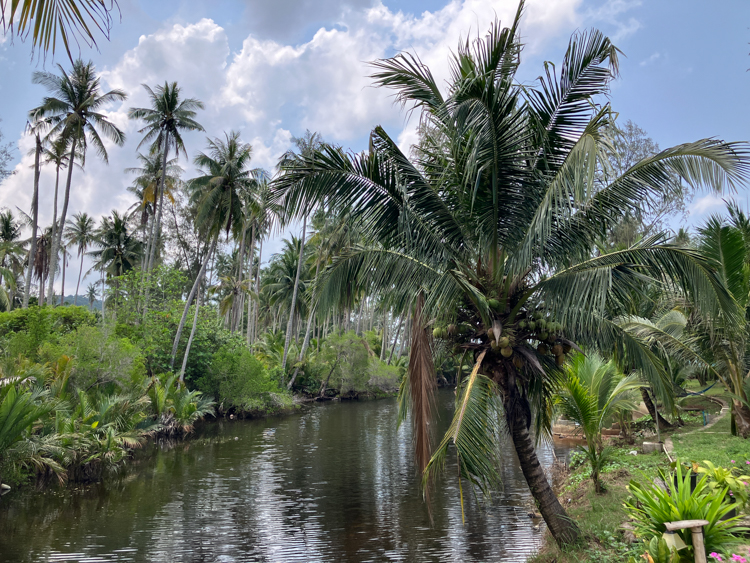
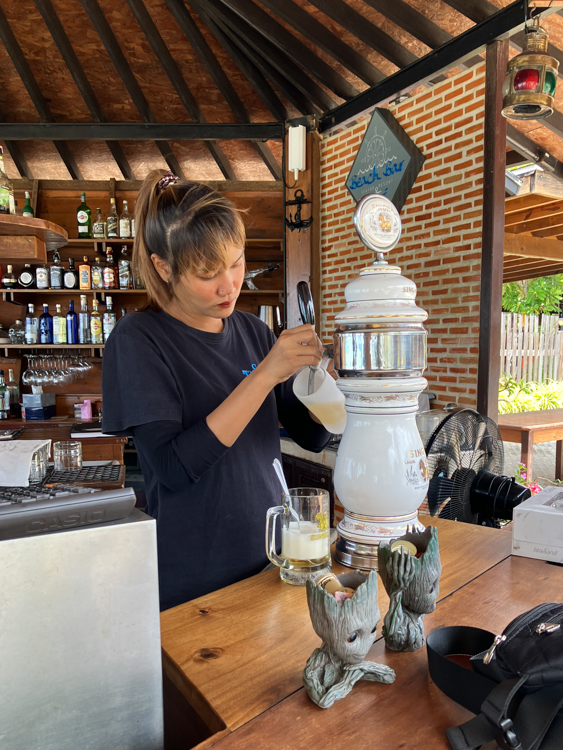
After our meal, some of the crew headed off for a massage, but the rest of us only got about ten metres from the Sea Far restaurant before we encountered the Sea Far beach bar. We didn’t have any particular plan, so Ivana suggested that we have a beer while we thought about it. One thing led to another, and by the time the others had got back from their massage, we were still sitting on the beach and it was early afternoon.
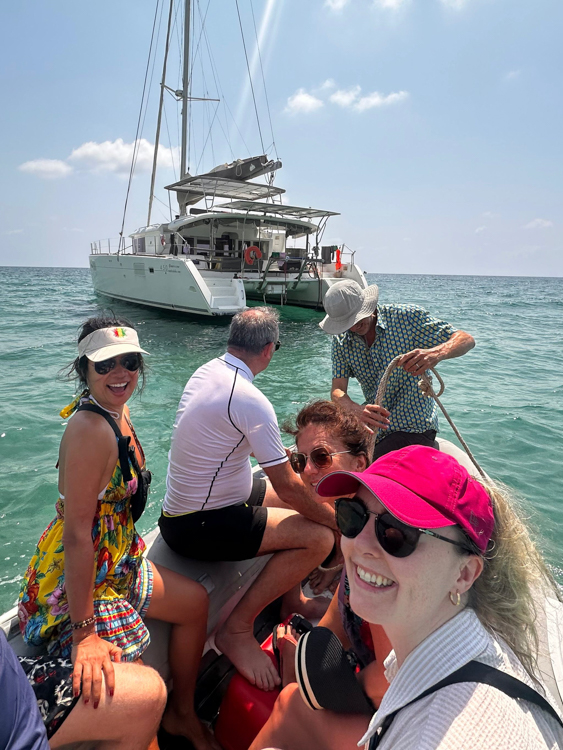
Back on the yacht, it was the top of the day and pretty hot, and there was once again no wind at all. We fired up the generator, and for the first time, the air conditioning wouldn’t come on. Remembering the week without air-conditioning the previous year on a different charter boat, we didn’t hang about but immediately contacted Aqua base, who told us where to look.
I soon had the floor up, staring in a little dismay at the plumbing. A catamaran with four en suites has a lot of pipes!
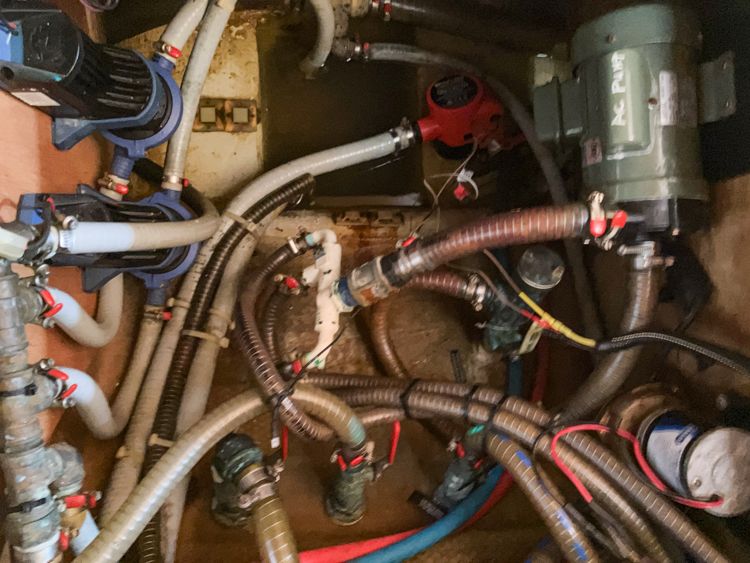
In the end I took the cooling pump apart, cleaned the filters, shook the air bubbles out of the whole system, and thankfully it started working again.
We would have loved to spend some more time on Ko Kood, but we needed to get back to Ko Chang to return the yacht. The fisherman’s village had been fun, though, so we decided to visit Bang Bao Pier, a similar feature on Ko Chang.
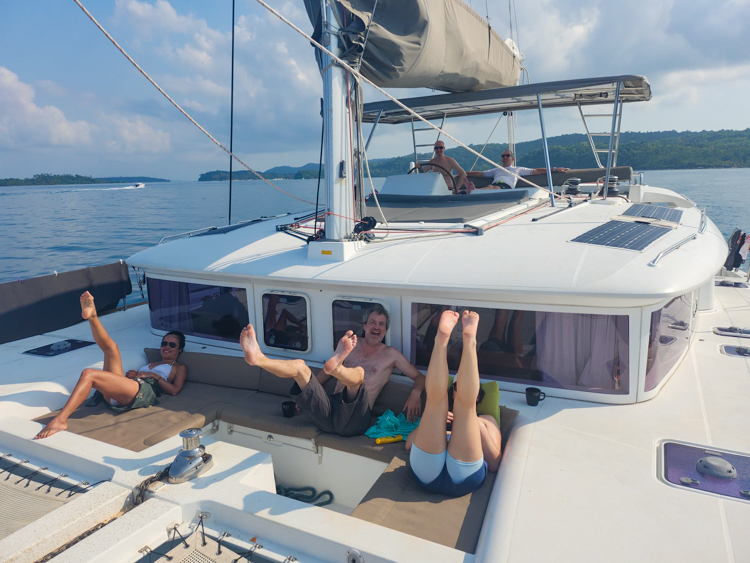
The passage took some hours in the still calm, and we lazed about and dozed in the sun, until Ko Chang hove into view.
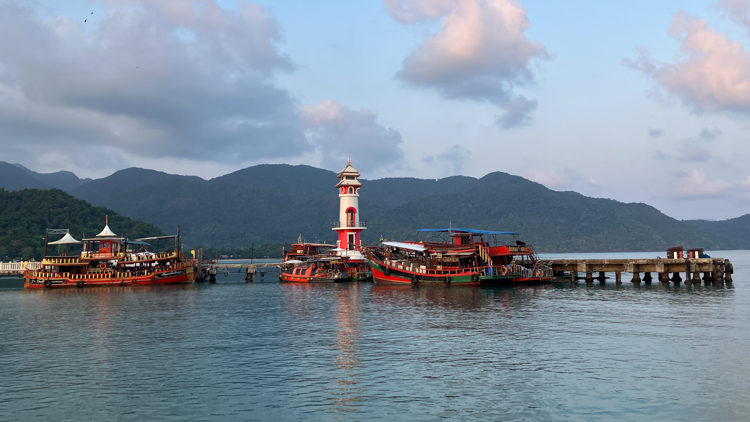
Bang Bao Pier
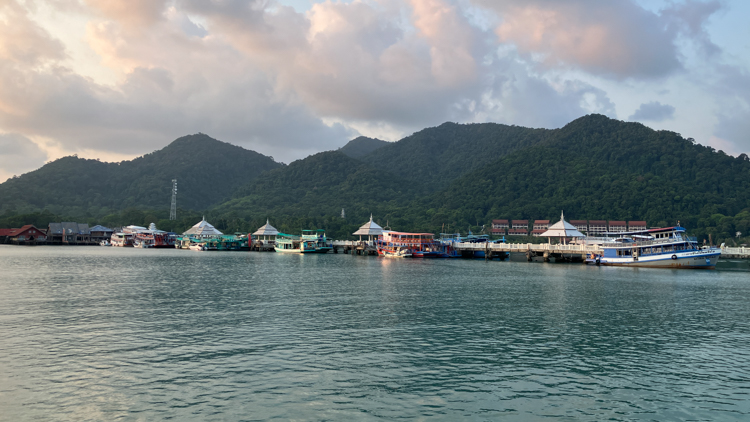
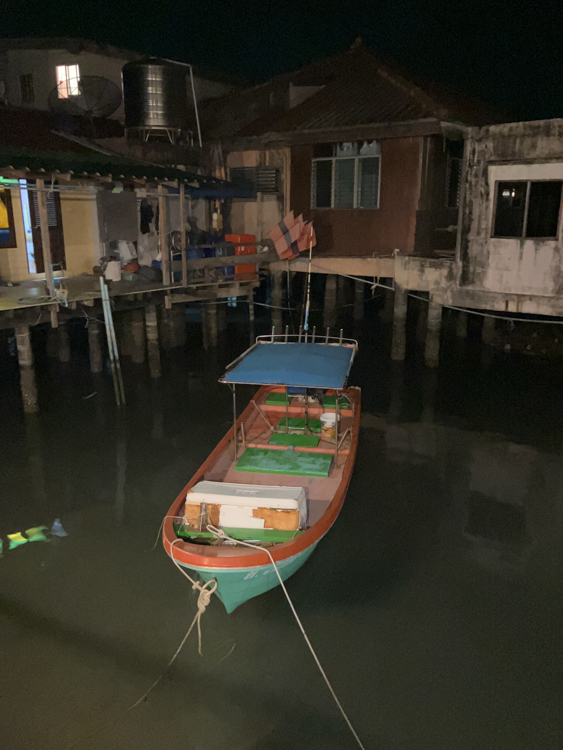
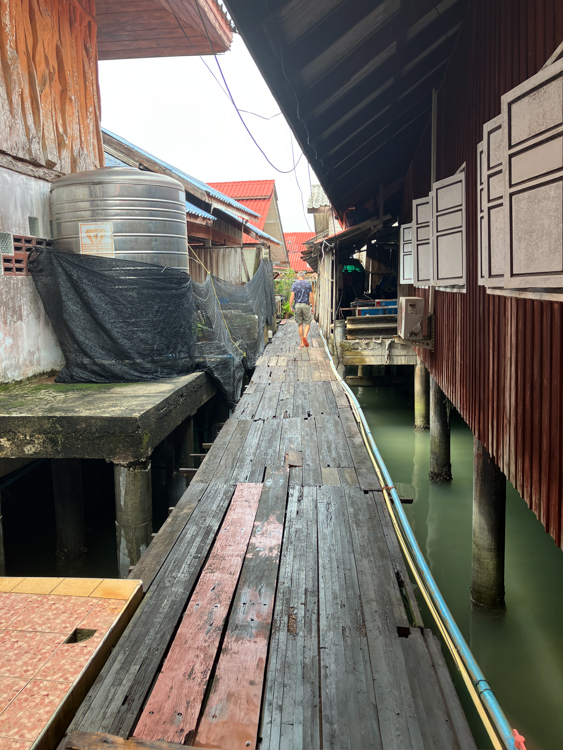
Bang Bao is a village based around a long wooden pier encrusted with wooden structures. Shops and homes and businesses are all stacked higgledy-piggledy among the colourful working boats.
The surrounding bay is very shallow and littered with crab pots, but we found a place to drop anchor near to the tower at the end of the pier.
Ivana wanted a refresher course in dinghy-driving, so we went out in the tender for a recce, because it wasn’t at all obvious how we were going to actually get onto Bang Bao Pier that evening. The shallow water of the bay was striped with interestingly colourful spillages, and was murky in an oily chunky way that did not encourage swimming, or even getting our hands wet.
The dive boats were moored several deep, but we spotted several stone staircases peeking out from between them, which should allow us to gain access to the pier later. Ivana pulled off some triumphal doughnuts.
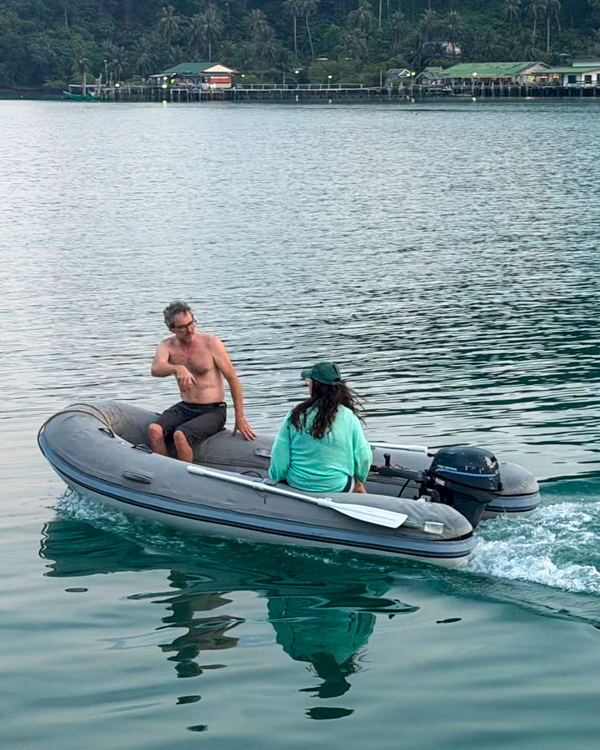
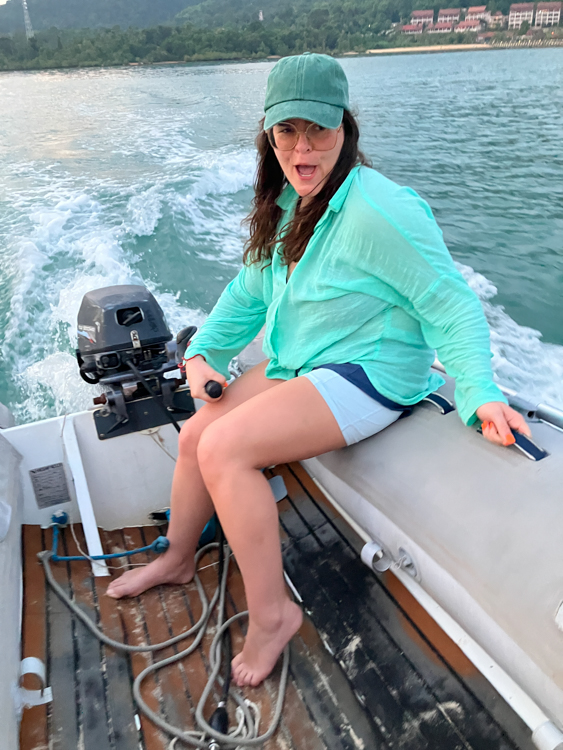
Later that evening, we all packed into the dinghy and puttered over to explore. We found that many of the mussel-encrusted staircases were inaccessible behind criss-crossing mooring lines, and some gave on to a large section of the pier that appeared to have collapsed. At last we saw an opportunity in the fading light, lifted some lines out of the way and drove the tender under the pier to the back side of a concrete step, tied up, and climbed up to explore.
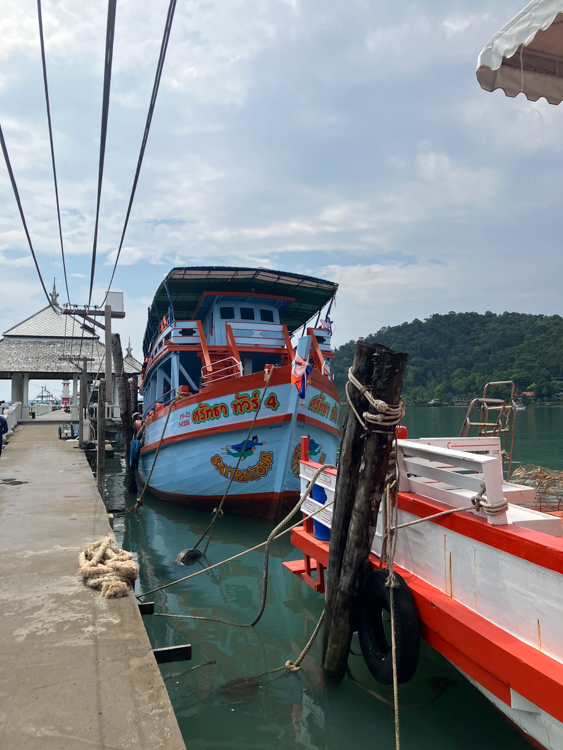
The shoreward end of Bang Bao Pier is roofed over, sheltering many shops and small businesses, and side-jetties zig-zag off to private dwellings. The shops were mostly closed, probably because it was shoulder season, and we had the place to ourselves.
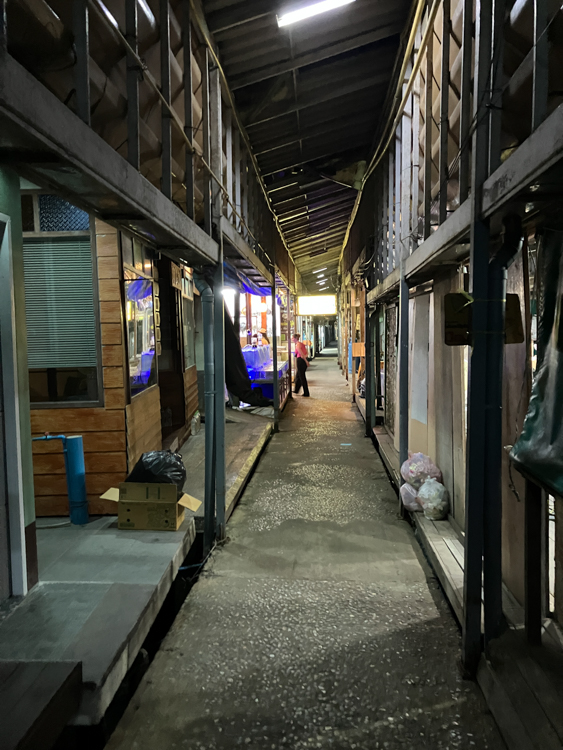
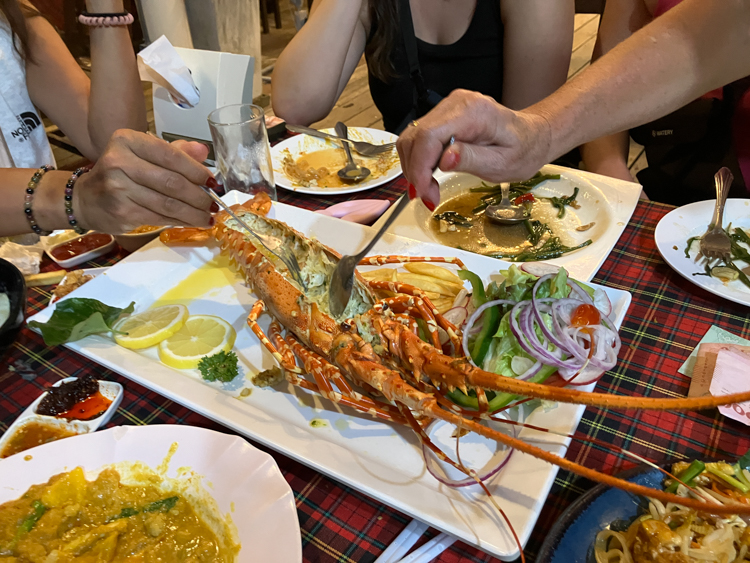
A handful of small cafes and larger restaurants were open, and we chose Chow Lay Seafood. Within minutes of arrival, Vananh was walking the tanks of live seafood and ordering an enormous spread.
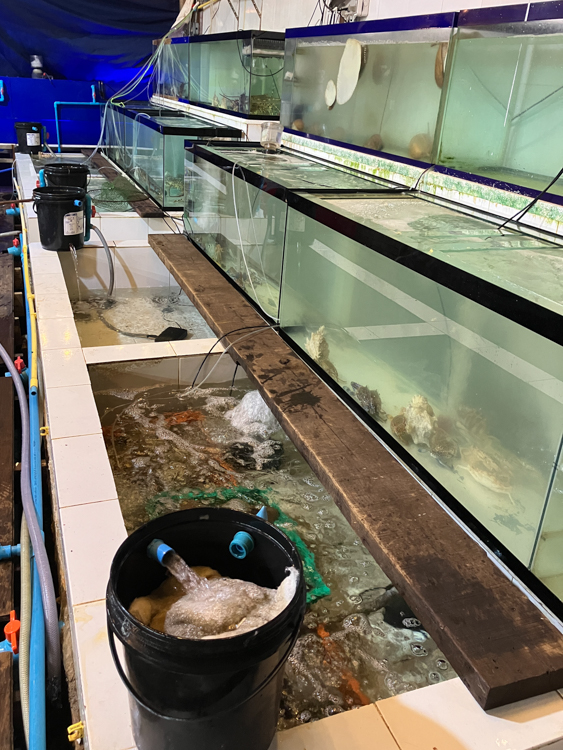
We had lobster and crab and sea bass and squid and fresh salad, washed down with two different kinds of tom yum. It was all beautifully presented and delicious.
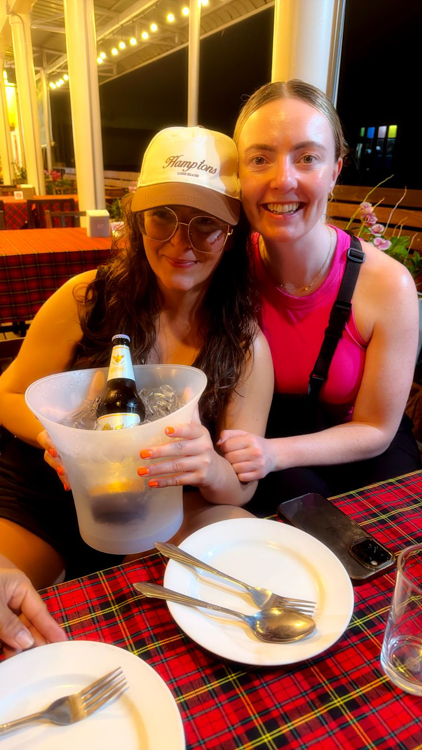
There was slight consternation when Ivana and Shanice were served a warm Chang beer that had clearly been open for some time. It took a little while to explain the problem to the staff, who we suspect were teetotal, but after that every beer arrived ostentatiously closed and in a bucket full of ice.
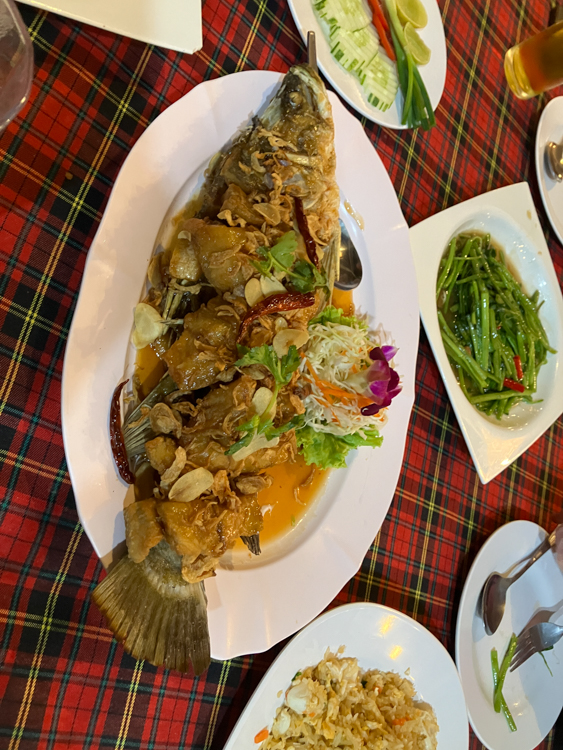
We had a really, really good meal, and managed to more than triple our usual restaurant spend (for the record, usually we spent about 3000 baht for a meal for seven; this one came in at over 10,000 baht due to all the speciality dishes that we ordered). It was thoroughly worthwhile.
After our meal, we walked to the shore-end of the pier to pick up some small supplies from a grocery there, and then navigated the dinghy the long way home around the pier, dodging fishing lines and incoming boats.
Once aboard, we opened an earthenware pot of yoo that we had picked up in Bang Bao. This is a fermented drink made with secret ingredients; a typical brew may contain sticky rice, galangal root, dried chili, sugarcane, betel nut root, coconut root, and yeast. The fermentation completes inside the pot, and when we broke the cement seal, we exposed a strange but not unpleasant smell, and a lot of dry rice husks.
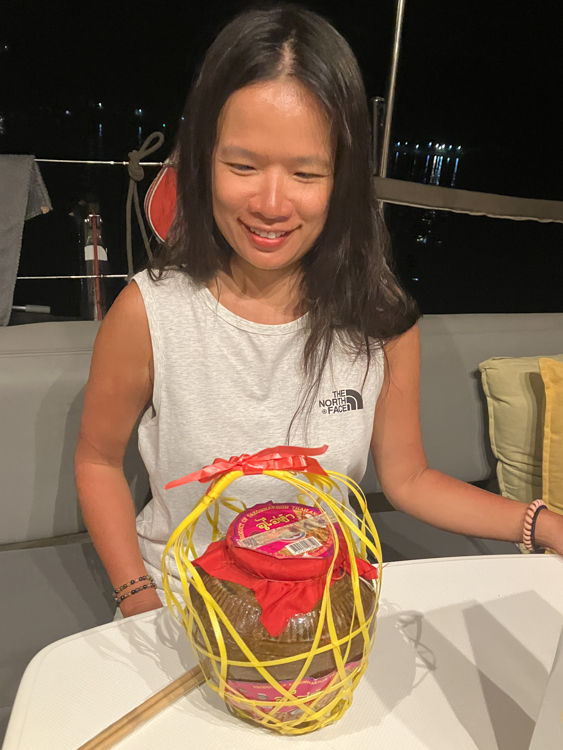
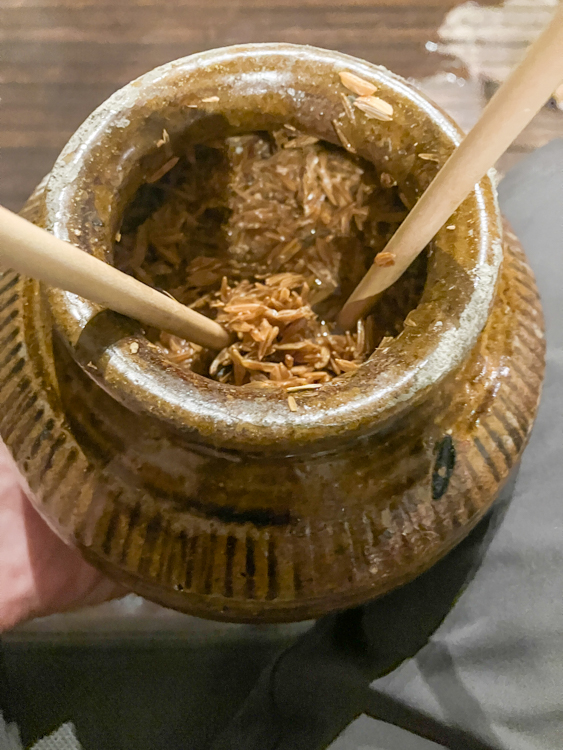
We had been told to add several cans of lemonade and then to drink the resulting brew through a straw. Later research showed that the locals sometimes add beer, rice wine, or local spirits instead.
With the lemonade, it tasted a bit like sweet saki. We wisely planned to sleep in next morning.
I enjoy your tales